


Forex trading testimonials don’t lie—especially when they come from folks who’ve watched their GBP/JPY scalp go from zero to hero over a lunch break. In 2026, India’s retail traders are more informed, more connected, and more demanding than ever. That’s exactly why this guide is stitched together with real trader stories, not sales fluff.
Choosing a broker today feels like dating apps did ten years ago—too many choices, too much noise. Some traders swear by MetaTrader 4’s familiarity; others won’t touch anything without TradingView integration and cloud sync. This article cuts through the noise with comparisons and real feedback that speak your language: results or get out of the way.
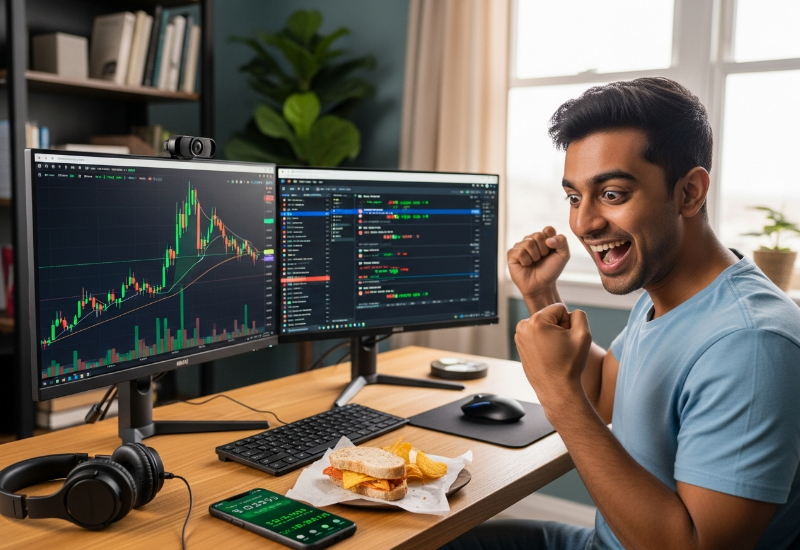
Key Takeaways from Forex Trading Testimonials: Real Trader Insights in 2026
Platform Preferences:
Traders are split between MetaTrader 4/5, cTrader, and web platforms, each offering distinct benefits for different trading styles.
Currency Pair Choices:
EUR/USD remains the “training ground” and long-term favorite, while volatile GBP/JPY is popular for aggressive scalpers.
Scalping vs Swing:
Scalpers obsess over spreads and execution speed; swing traders care more about swap rates, charting tools, and weekend gap behavior.
Risk Management Focus:
Traders who last more than 12 months almost always emphasize position sizing, stop-loss logic, and emotional control.
Broker Trust:
Positive testimonials consistently highlight transparent pricing, smooth withdrawals, and responsive customer support.
Top Forex Brokers in India 2026: Real Trader Insights
The Indian forex trading landscape in 2026 is a mix of onshore exposure through regulated currency derivatives and offshore trading via international CFD/FX brokers. While official channels exist on local exchanges, many active traders still prefer global brokers for tighter spreads, more instruments, and advanced platforms.
From reading and comparing real testimonials, a few themes keep repeating:
Traders don’t just choose a broker—they eventually outgrow or abandon them based on performance.
Slippage during news, unexplained spread spikes, and delayed withdrawals are common red flags.
On the positive side, more brokers now support INR-friendly funding, local support, and tailored education for Indian clients.
This guide organizes those experiences into a structured comparison so you can see which brokers consistently deliver on platforms, costs, execution, and support.
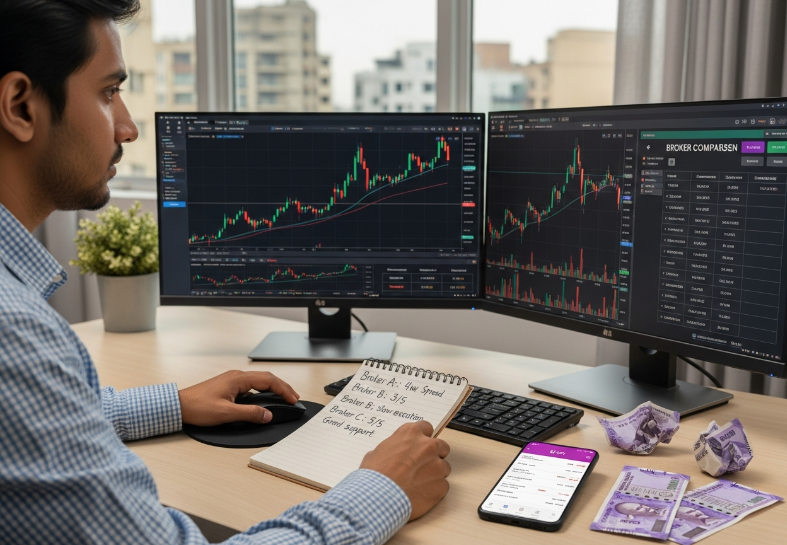
5 Key Features of India’s Best Forex Brokers
From the perspective of real traders, five core features usually decide whether a broker makes the cut:
Trading platforms & tools
Order execution quality
Spreads, commissions & hidden fees
Risk management & account protections
Education, support & community
Let’s dive into each with real-world flavor.
1. Trading Platforms & Tools
For Indian traders juggling jobs, time zones, and family commitments, platforms aren’t just software—they’re workspaces for survival.
Key elements traders repeatedly mention:
Multi-device access (desktop + mobile + web)
Clean interface where you can execute under pressure
Rich indicators and drawing tools
Support for EAs or algorithmic trading where needed
Insights on MetaTrader 4 Platform Usage in India
MetaTrader 4 (MT4) still dominates among Indian retail traders. Reasons that frequently show up in testimonials:
Simple, familiar layout that’s easy to learn but powerful enough to keep using for years
Rich ecosystem of indicators and Expert Advisors (EAs)
Built-in support for automated trading and strategy testing
Many traders report that MT4’s “old-school” look is actually an advantage—fewer distractions and more focus on price action. A typical sentiment:
“I tried switching platforms twice, but I keep coming back to MT4. My templates are set, my EAs are optimized, and execution just works.”
For advanced users, MT4’s strengths are all about control: precise order entries, custom scripts, and the ability to test ideas before risking real capital.
Insights on Mobile vs Desktop Terminal Usage
Indian traders today are split between:
Mobile-first traders who check charts on commutes, during lunch breaks, or between meetings
Desktop-focused traders running multiple screens with several pairs and timeframes in parallel
Common patterns in reviews:
Mobile apps are primarily used for monitoring and managing existing trades
Desktops are used for planning, backtesting, and executing complex strategies
Many scalpers avoid opening new positions from mobile during high volatility due to past experiences with mis-taps or laggy connections
A recurring line in testimonials: “Mobile for emergencies; desktop for decisions.”
Technical Market Analysis Resources Offered
Top brokers, both domestic-facing and offshore, tend to offer:
Multi-timeframe interactive charts
Built-in indicators like RSI, MACD, Bollinger Bands, and Ichimoku
Real-time data feeds integrated into MT4/MT5 or proprietary platforms
Depth-of-market tools (especially on ECN/STP accounts)
Bridges or native integration with TradingView
These tools are less about pretty visuals and more about helping traders decode market structure and volatility so they can move from guessing to informed decision-making.
Psychological Market Readiness Tools
Some brokers go beyond charts and offer:
Trade journaling tools
Performance analytics (win rate, average risk–reward, drawdown)
Client sentiment indicators based on aggregate positioning
Many long-term testimonials mention that the real turning point was not finding a “holy grail indicator,” but tracking their own behavior—spotting patterns like overtrading, increasing size after a loss, or abandoning plans after a losing streak.
User-Friendly cTrader Trading Platform Highlights
The cTrader platform is frequently praised for its:
Fast, reliable execution well-suited for scalpers
Clean, modern interface with intuitive charting
Support for both manual trading and cAlgo-based automation
Traders who felt limited by older interfaces often describe cTrader as what a “modern trading platform should feel like,” especially for fast-moving strategies.
Benefits of Attending Forex Trading Seminars
Offline and online seminars still matter in 2026:
Direct interaction with experienced traders and mentors
Structured breakdown of risk, position sizing, and strategy design
Live Q&A that cuts through generic advice
Indian traders often report that a single solid seminar helped them finally understand:
Why blindly copying signals rarely works long term
How to size positions relative to account size
How to set realistic expectations and avoid gambling behavior
Webinars hosted by brokers and independent educators also reinforce these lessons, especially when they include live market walkthroughs.
2. Order Execution Quality
Execution is the heartbeat of any forex broker.
Traders typically judge execution on:
Speed – how fast orders are filled, especially during London and New York sessions
Slippage – how often they get worse prices than expected
Requotes – how frequently orders are rejected or requoted during volatility
Complaints in reviews often sound like:
“Everything looked fine until a big news event. Spreads exploded, fills slipped badly, and my stops didn’t behave the way I expected.”
On the flip side, glowing testimonials often describe brokers where:
Market orders fill quickly at or near requested price
Slippage is small and symmetrical (positive as well as negative)
Platform performance remains stable during major data releases
3. Spreads, Commissions & Hidden Fees
Real traders care about all-in costs, not just headline spreads.
They pay close attention to:
Spread levels on major pairs (especially EUR/USD and GBP/USD)
Commission per lot on raw or ECN accounts
Swap/overnight financing rates for swing or position trades
Deposit and withdrawal fees, including conversion costs for INR
Inactivity or maintenance fees on dormant accounts
Indian traders often express frustration when brokers quietly:
Widen spreads after promotional periods
Change fee structures without clear communication
Add new charges around withdrawals or conversions
Transparent, stable pricing earns trust; hidden or shifting fees destroy it quickly.
4. Risk Management & Account Protection
Survivors in the market are almost always disciplined risk managers.
Top themes from testimonials:
Preference for negative balance protection, especially on high-leverage accounts
Clear explanations of margin call and stop-out levels
Ability to set stop-loss and take-profit orders easily, including guaranteed stops on some instruments
One trader summarized their turnaround after paying more attention to Indian rules and limits tied to SEBI regulations: limiting risk per trade to 1–2% of account equity and avoiding over-leveraged bets around major news events.
Others credit simple guardrails like:
No trading immediately around major news (e.g., NFP, central bank decisions)
Stopping for the day after three consecutive losses
Avoiding “double or nothing” revenge trades
These habits show up again and again in long-term success stories.
5. Education, Support & Community
Brokers that earn strong reviews from Indian clients typically invest in:
Localized support in English, Hindi, and sometimes regional languages
Evening webinars timed for IST
Quality written content (strategy guides, market outlooks, platform tutorials)
Active communities on Telegram, Discord, or in-app chats
New traders especially appreciate brokers who guide them from basic concepts to more advanced strategies and live examples, rather than dumping unstructured content on them.
Real Trader Forex Trading Testimonials: From First Loss to Consistent Wins
This section focuses on themes repeatedly mentioned in live reviews and long-form trader stories.
Navigating the EUR/USD Currency Pair for Optimal Trades
The EUR/USD pair is where many Indian retail traders take their first steps—and often where they stay. Independent analyses built on Bank for International Settlements data show that EUR/USD typically accounts for around one-fifth of global daily FX turnover, which makes it a natural starting point thanks to tight spreads and deep liquidity.
Traders like it because:
Price action tends to react in a more “orderly” way to key macro events (ECB meetings, US jobs data, inflation prints)
Technical levels like support, resistance, and Fibonacci retracements are often respected
Spreads remain relatively tight throughout the main sessions
Many testimonials describe EUR/USD as the “classroom” pair—ideal for learning how news, trend shifts, and volatility really work before experimenting with more explosive crosses like GBP/JPY.

Scalping Trading Strategy Success Stories
Scalping remains a favorite among Indian traders who can watch the markets during London open or early US session.
Recurring ingredients in positive scalping stories:
ECN-style accounts with ultra-tight spreads and low commissions
Low-latency connections to broker servers, sometimes via VPS
Strict rules about when not to trade (e.g., avoiding the first minutes after major news releases)
Industry case studies on low-latency Forex VPS hosting highlight that automated and semi-automated strategies generally perform more consistently when hosted close to major liquidity hubs.
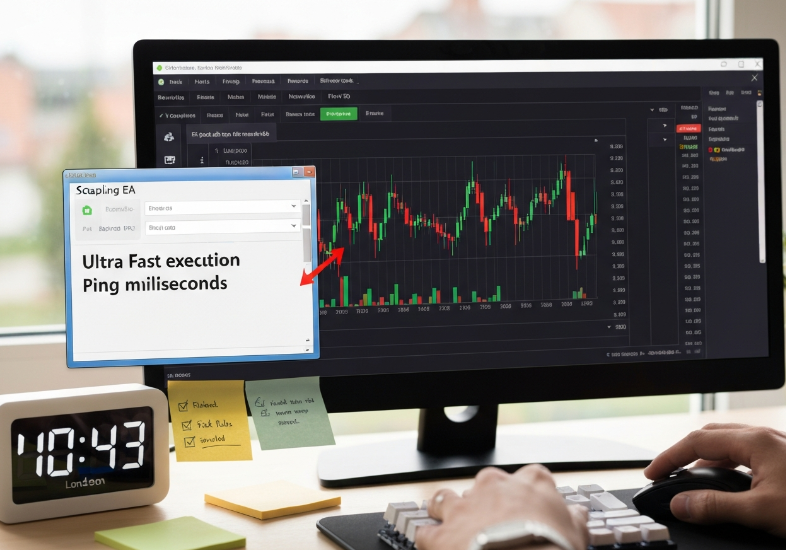
As one trader put it in a public review on Myfxbook:
“When I moved my scalping EA to a lower-latency broker and VPS, the difference was night and day—no more random spikes eating half my edge.”
Risk Management Wisdom Shared by Traders
Across hundreds of testimonials, risk management patterns are crystal clear:
Survivors keep position sizes small and stop-losses consistent.
They treat risk per trade (often 0.5–2% of equity) as non-negotiable.
They measure performance not by single big wins, but by smooth equity curves and controlled drawdowns.
Some experienced traders report that using tools like the Average True Range (ATR) to place stops outside normal noise helped them avoid being “wicked out” too early while still respecting overall risk limits.
Many also keep detailed trading journals—sometimes supported by platform analytics—to track emotions, rule-breaking, and slippage, then adjust their behavior accordingly.
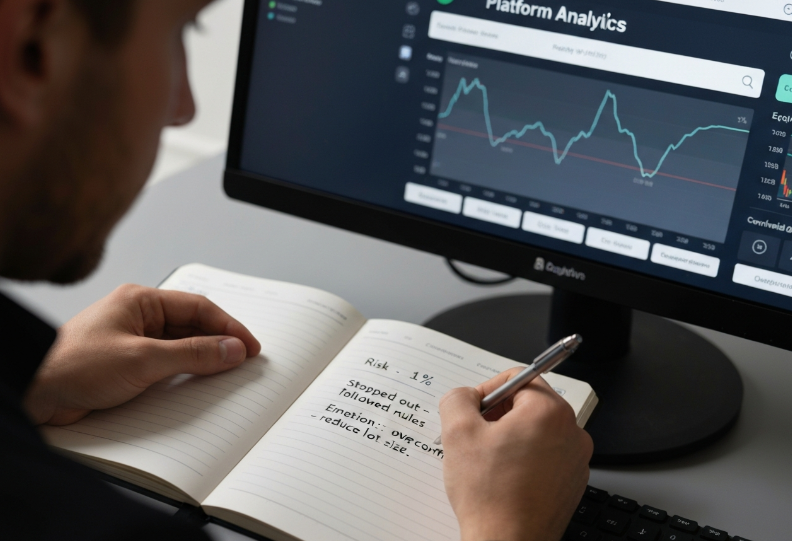
Comparative Review: Forex Broker Platforms and Tools in India 2026
This section compares how real traders perceive the tools and infrastructure behind different brokers, especially for automation and strategy development.
Comparative Analysis: Algorithmic Trading Strategy Reviews
A growing percentage of Indian traders relies on algorithmic systems, whether fully automated EAs or rule-based semi-automatic scripts.
Key points from reviews and case studies:
Algorithm performance heavily depends on spreads, commissions, and execution speed.
Low latency and stable connectivity (via VPS or direct hosting) significantly reduce slippage-based distortions in backtests vs live results.
Brokers that offer reliable APIs and support for MT4/MT5 EAs or cTrader cBots tend to receive more positive feedback from systematic traders.
Traders frequently mention that after switching to brokers with better execution infrastructure, previously unprofitable bots became stable or even consistently profitable.
Influence of Trader Ratings on Platform Features
Broker ratings, especially on comparison sites and community platforms, often influence future platform development:
Interface Upgrades – Complaints about clunky navigation push brokers to simplify dashboards and order tickets.
Execution Improvements – Low ratings due to lag or frequent requotes encourage investment in better servers and routing.
Support Enhancements – Repeated criticism about slow or unhelpful staff often leads to expanded support hours and more language options.
Platforms that ignore user feedback tend to lose ground quickly to those that respond and iterate.
Offline vs Online Reviews & Seminars
While star ratings and YouTube reviews are helpful, Indian traders still place significant weight on:
Local meetups and workshops
Telegram or WhatsApp communities
Live seminars and interactive webinars
Seeing real trades—even small ones—executed live in front of an audience gives many traders more confidence than dozens of anonymous online comments.
On rebate-style platforms like EasyCashBackFx, traders can also stack cashback or rebates on top of broker spreads and commissions, improving their net cost structure over time when using supported brokers.
Value Comparisons Among Brokers for Day Trading Strategy
Day trading in forex is fast-paced and unforgiving if your broker’s execution or spreads are subpar. Real-world feedback from Indian intraday traders often highlights a handful of popular international brokers.
Below is a simplified comparison of conditions day traders frequently discuss (figures are illustrative and may vary by account type and market conditions):
| Broker | Avg Spread (EUR/USD) | Typical Execution Speed | Min Deposit (USD) |
|---|---|---|---|
| IC Markets | 0.1 pips | <40ms | $200 |
| Pepperstone | 0.2 pips | <50ms | $200 |
| XM | 0.4 pips | ~70ms | $5 |
| Exness | 0.3 pips | ~60ms | $10 |
Scalpers and fast intraday traders often rate IC Markets and Pepperstone very highly on spread tightness and execution reliability, while XM and Exness are frequently praised for low minimum deposits and flexible account options.
Across various forums, traders emphasize that combining tight spreads with fast, stable execution is critical for intraday consistency.
Recommendations for TradingView Advanced Charts Users
If you rely heavily on advanced charting, custom indicators, or multi-timeframe analysis, brokers that integrate smoothly with TradingView are especially attractive.
Commonly mentioned options:
IC Markets – Offers access to advanced charting tools and low-latency execution favored by technical traders.
Pepperstone – Popular for direct TradingView integration plus strong order execution statistics.
FXCM – Known for solid data feeds and reliable chart accuracy on its supported platforms.
Users who live in TradingView for analysis tend to be happiest with brokers that offer native or well-supported integration rather than clunky third-party bridges.
Understanding Forex Broker Ratings in India
Broker ratings go beyond just star counts—they summarize diverse aspects of the trading experience.
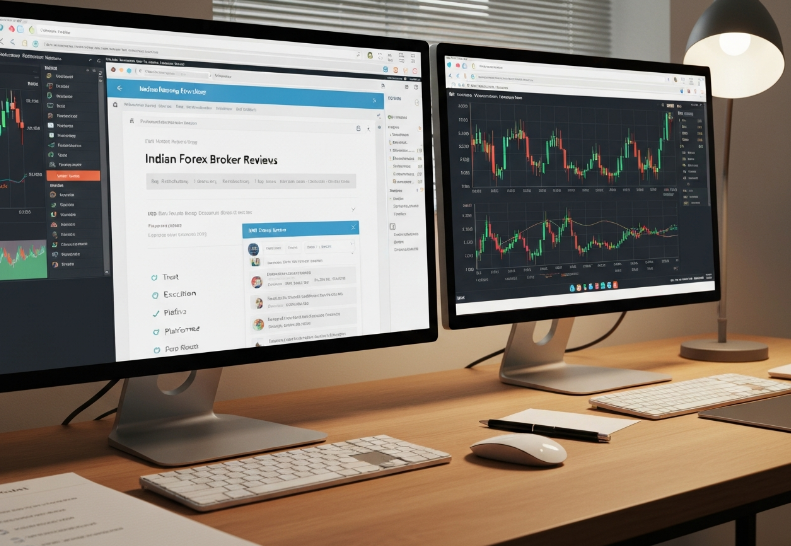
Trust Ratings vs. Execution Metrics
In reviews from Indian traders, brokers are usually evaluated across:
Trust & Regulation – Global and local licenses, reputation, and history
Execution Quality – Slippage patterns, requote frequency, and stability during busy sessions
Support Quality – Response times, issues resolved, and language support
Platform Stability – Frequency of disconnects, freezes, or price feed issues
Local concerns include:
How brokers handle questions related to RBI/SEBI rules
INR deposit and withdrawal options (UPI, bank transfer, cards, wallets)
Typical processing times for withdrawals back to Indian bank accounts
Traders are quick to downgrade brokers that delay payouts or change margin rules without clear communication.
Which Forex Brokers Are Most Recommended by Real Traders?
While preferences vary, some brokers repeatedly receive positive mentions in reviews:
IC Markets – Often praised for raw spreads, fast execution, and strong support for scalpers and algorithmic traders.
Pepperstone – Favored for platform variety (MT4/MT5/cTrader), good pricing, and TradingView compatibility.
XM – Recommended by smaller-account traders for low minimum deposits and promotional offers.
Exness – Highlighted for flexible leverage, competitive spreads, and convenient funding.
FXCM – Respected for research tools, long-standing presence, and stable execution.
Many experienced traders keep at least two live accounts:
One main account with their primary broker
One backup account to use during technical issues or when testing new strategies
This diversification reduces dependence on any single platform or liquidity provider.
Final Thoughts: How to Choose Your Forex Broker in India 2026 Based on Real Experiences
If you strip away marketing slogans, choosing a broker in 2026 comes down to a practical checklist:
Platform Comfort
Do you feel confident using the platform under time pressure?
Does it support your style—scalping, swing trading, or automation?
Platforms like MetaTrader 4 remain popular precisely because they balance simplicity and power.
Execution & Spreads
Are your trades getting filled where you expect, especially at volatile times?
Do real traders’ testimonials about spreads and slippage match the broker’s marketing claims?
Risk Management Tools
Can you set stop-loss and take-profit orders easily?
Is negative balance protection available, and are margin rules clearly explained?
Support & Local Fit
Does the broker understand Indian traders’ needs—funding options, time zones, and regulatory concerns?
How do other Indian clients describe their withdrawal experiences and support interactions?
Bonuses, Cashbacks & Rebates
Extras from partners like EasyCashBackFx can improve your net results, but they should complement—not replace—strong core broker quality.
The smartest approach isn’t to chase every promotion; it’s to pick a broker that fits your strategy, test it with a small live account, study real trader reviews, and only scale up once trust and performance are proven over time.
Your broker shouldn’t just look good on paper—it should feel reliable every time you click Buy or Sell.
References
MetaQuotes – MetaTrader 4 Platform for Forex Trading and Technical Analysis – https://www.metatrader4.com/en
BestBrokers – Most Traded Forex Currency Pairs – https://www.bestbrokers.com/forex-trading/most-traded-forex-currency-pairs/
CompareForexBrokers – Forex Trading Industry & Market Statistics – https://www.compareforexbrokers.com/trading/statistics/
SEBI – Securities and Exchange Board of India (Stock Brokers) Regulations, 2026 – https://www.sebi.gov.in/legal/regulations/jan-2026/securities-and-exchange-board-of-india-stock-brokers-regulations-2026_98974.html
Trade Brains – How Low-Latency Forex VPS Hosting Gives Retail Traders a Competitive Edge – https://tradebrains.in/brand/how-low-latency-forex-vps-hosting-gives-retail-traders-a-competitive-edge/
Investopedia – Average True Range (ATR) Definition – https://www.investopedia.com/terms/a/atr.asp
TradingView – Advanced Financial Charting & Social Trading Platform – https://www.tradingview.com/
Myfxbook – Online Automated Analytical Tool for Forex Trading Accounts – https://www.myfxbook.com/
IC Markets – Official Website – https://www.icmarkets.com/
Pepperstone – Official Website – https://pepperstone.com/
XM – Official Website – https://www.xm.com/
Exness – Official Website – https://www.exness.com/
FXCM – Official Website – https://www.fxcm.com/
FAQs about Forex Trading Testimonials
What are the most consistent trader insights shared in forex trading testimonials?
Feedback often paints vivid scenes of traders glued to their MetaTrader 4 platforms, watching MACD technical indicator shifts like the tide.
Mobile trading applications become lifelines during commutes.
Stop-loss order placement is spoken of as a safety net many wish they’d used sooner.
There’s a human heartbeat behind every victory or misstep—charts may be digital, but stories are personal.
How do brokers set the stage for effective scalping trading strategy results mentioned by traders?
Speed and precision dominate these accounts:
Low spreads on EUR/USD currency pair trades offer tight margins for quick gains.
Desktop trading terminals with minimal lag give scalpers confidence under pressure.
Pairs such as GBP/JPY currency pair deliver thrilling volatility that fuels adrenaline-filled sessions.
Many say it feels like sprinting through financial rainstorms—they chase moments more than days.
Which platforms earn loyalty among experienced Indian traders in authentic testimonials?
Three names appear almost like trusted companions:
MetaTrader 4 platform — appreciated for charts rich with Bollinger Bands indicator signals and Moving Average indicator clarity.
cTrader trading platform — home to swift execution and algorithmic trading strategy tools that feel crafted with purpose.
TradingView advanced charts — favored by swing trading strategy users who savor patient setups over impulsive clicks.
What capital preservation strategies echo through trader discussions?
Position sizing techniques aren’t just numbers; they’re described as “sleep well” factors after unpredictable nights in USD/CHF or NZD/USD currency pair territory.
Stop-loss order placement and risk-reward ratio analysis keep losses from becoming cautionary tales.
When sentiment market analysis turns sour, disciplined exits have saved portfolios—and tempers—from collapse.