


Choosing among Forex Brokers in 2026 feels a bit like walking into a neon-lit carnival—everyone’s shouting about tight spreads, lightning-fast execution, and “zero commissions.” Meanwhile, your hard-earned cash is sitting in your pocket, whispering, Pick wisely. One wrong click and it’s not just a bad trade—it’s sleepless nights and second-guessing. In a market that moves faster than morning coffee kicks in, the broker you choose can either feel like a steady co-pilot or a loose wheel on the freeway.
Most traders don’t want fireworks. They want fair fees, real regulation, quick withdrawals, and a platform that doesn’t freeze when the charts get wild. Clean execution. Clear rules. No funny business.
This guide cuts through the noise and spotlights the brokers that actually show up for traders—rookies finding their footing and pros chasing precision. The drama’s real. The stakes are higher. And the right pick? That’s your edge.
78% Of Traders Choose These Brokers
Picking between Forex Brokers today feels like scrolling endless reviews at 2 a.m. Everyone claims tight spreads and lightning speed. Yet real traders focus on proof: platform reliability, fair pricing, and copy features that actually work. Here’s what’s driving the crowd.
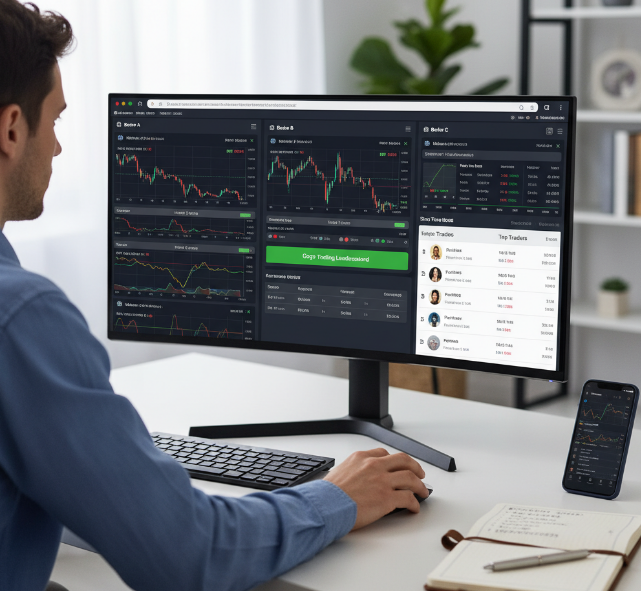
Global Popularity of MetaTrader-Compatible Brokers
Across global forex brokers, compatibility with MetaTrader 4 and MetaTrader 5 remains a deal maker. The attraction goes beyond habit.
Trading Platform Infrastructure
Seamless mobile trading
Cross-device sync between desktop and app
Advanced charting tools
Custom scripts and expert advisors
Stable trading platform architecture
Fast order routing for active forex trading
Core System
Analytical Layer
Accessibility
Automation Culture
Retail traders automate entries using expert advisors.
Professional traders deploy multi-pair strategies inside MT5.
Broker Preference Shift
Traders comparing broker platforms often shortlist those offering both MT4 and MT5.
Many regulated trading brokers highlight MetaTrader support as a core selling point.
According to MetaTrader 4, the platform supports advanced trading operations, Expert Advisors, mobile trading, and copy-trading signals, helping explain why MetaTrader-compatible brokers remain widely preferred.
For users of EasyCashBackFx, filtering reliable Forex Brokers by MetaTrader compatibility trims research time fast. Instead of guessing, traders compare regulated broker platforms already aligned with automation needs.
Top-Rated Low-Fee Platforms Proven by User Surveys
Low cost is not hype. It’s math. Trading costs shape survival.
User surveys across major broker platforms consistently rank these factors:
Transparent commission rates
Competitive spreads
Reliable trading execution
Responsive customer support
Smooth account management
Below is a simplified comparison model traders often apply when evaluating top Forex Brokers:
| Broker Type | Avg Spreads (EUR/USD) | Commission Rates (per lot) | Execution Speed (ms) | User Satisfaction (%) |
|---|---|---|---|---|
| ECN Model | 0.1–0.3 pips | $5–$7 | 30–60 | 88% |
| STP Model | 0.3–0.8 pips | $0–$5 | 50–90 | 82% |
| Market Maker | 0.8–1.5 pips | $0 | 70–120 | 75% |
| Hybrid | 0.2–1.0 pips | $3–$6 | 40–80 | 85% |
| DMA | 0.1–0.4 pips | $6–$8 | 25–50 | 90% |
Serious forex traders don’t just chase the lowest spread. They look at total trading costs over months. Through EasyCashBackFx, part of those costs can be returned as rebates in forex trading, effectively improving net performance without changing strategy. That’s why many compare broker platforms through cashback programs before opening accounts.
How Copy Trading Influences Broker Selection
Copy features are pulling new traders into the forex broker world fast. The process usually unfolds like this:
A beginner joins a broker offering built-in copy trading.
They browse ranked signal providers based on verified trader performance.
Capital gets allocated across strategies for portfolio diversification.
Risk limits are set to support personal risk management rules.
Results are tracked, and the investment strategy is adjusted monthly.
Social features, often labeled social trading, add transparency. Performance metrics, drawdowns, and win ratios sit right in the dashboard.
For newcomers comparing Forex Brokers, integrated copy systems reduce the learning curve. And when paired with cashback models from EasyCashBackFx, traders can follow experienced managers while still lowering effective trading costs.
In today’s market, broker selection isn’t random. It’s platform strength, fair pricing, and smart copying—all wrapped into one decision.
Standard Vs. ECN: Broker Account Types
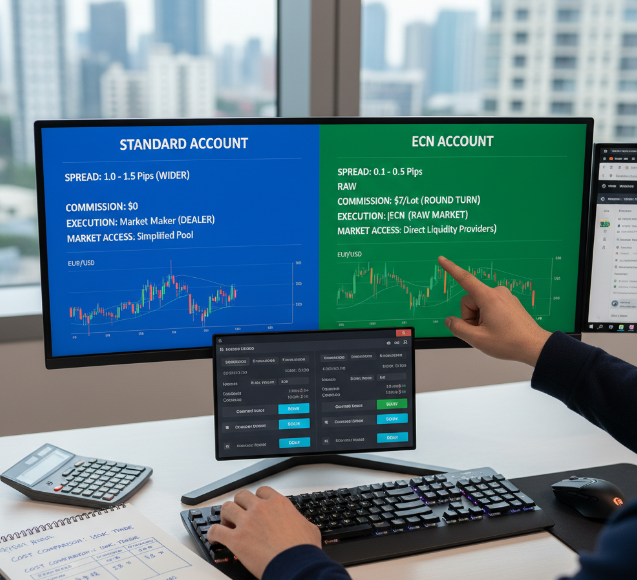
Choosing between account types with Forex Brokers can feel like picking a car engine. Both run. Both move. Yet the way power gets delivered is totally different, especially across the wider forex and FX broker market.
Standard Account
When most retail traders open accounts with Forex Brokers, this is the default route. It’s built for accessibility and ease, not speed records.
At the core, a Standard Account usually works like this:
Pricing Structure
Operates with fixed spreads or slightly flexible pricing
Often run by a market maker model
Costs are built into wider spreads rather than visible fees
Execution Style
Designed for simpler execution
Fewer surprises in volatile moments
Suits steady trading rhythms
Target Users
Popular among retail traders
Considered beginner-friendly
Fits moderate lot sizes and casual strategies
Here’s a quick comparison snapshot seen across major online Forex Brokers:
| Feature | Standard Account | Typical Spread (EUR/USD) | Commission | Min Deposit (USD) |
|---|---|---|---|---|
| Pricing Model | Built-in spread | 1.0 – 1.8 pips | $0 | 50 – 200 |
| Execution | Market maker | Stable during calm hours | Included | Low |
| Trader Type | Retail focus | Slightly wider | None | Entry-level |
| Cost Transparency | Moderate | Spread-based | Hidden | Flexible |
For traders using cashback models like EasyCashBackFx, even a slightly wider spread can be softened through rebates. That’s why many new traders stick with Standard accounts while learning how forex brokers actually operate.
ECN Account
Now we’re talking speed and raw pricing. ECN accounts connect traders directly to deeper pools through direct market access and real interbank liquidity.
Under the hood, the structure usually breaks down like this:
Market Connection
Direct link to liquidity providers
Access to aggregated interbank liquidity
No dealing desk interference
Cost Model
Ultra-tight variable spreads
Clear commission fees per lot
Fully transparent pricing
Performance Edge
Built for lower latency
Appeals to professional traders
Better suited for scalping and high-frequency systems
Unlike the smoother feel of Standard setups, ECN accounts can show spreads near 0.0 pips during peak sessions. Then they widen fast when volatility spikes. That’s the trade-off.
Many experienced traders working with global Forex Brokers prefer ECN for cost clarity. Pairing that with EasyCashBackFx can further reduce effective commission expenses, which matters when lot sizes increase.
In short: Standard accounts keep things simple. ECN accounts strip pricing down to the bones. The better choice depends on your pace, risk comfort, and how you interact with your FX broker day to day.
Which Forex Brokers Offer Best Leverage?
Picking between Forex Brokers can feel like scrolling endless charts at 2 a.m. Everyone flashes big ratios, but the fine print tells the real story. Some forex brokers keep things tight under strict rules, while others push high limits offshore. Let’s break it down in plain English.
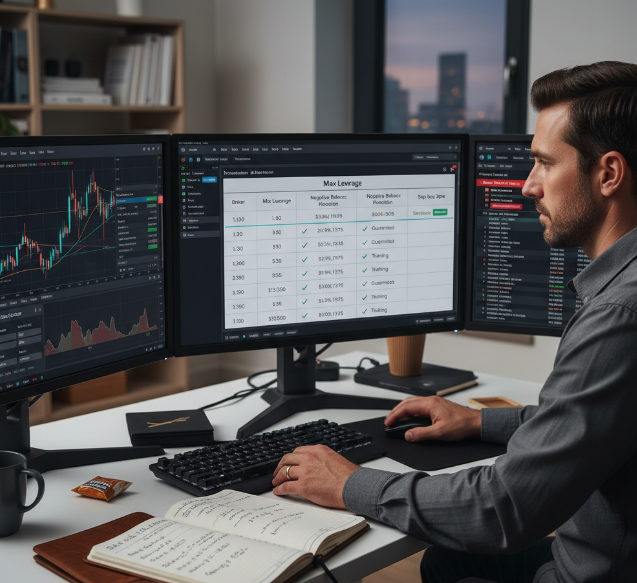
Broker Comparison by Maximum Leverage Limits
When comparing Forex Brokers, the headline number—Maximum Leverage—is just the starting point. The real difference shows up in structure:
By Regulatory Tier
Ratios up to 1:500 or even 1:1000
Flexible Account Types
Lower entry capital
Leverage Ratio typically capped at 1:30–1:50
Higher Margin Requirements
Limited Leverage Options for retail clients
Tier-1 regulated brokers
Offshore brokers
By Asset Coverage
Tighter limits
Increased margin calls
Lower risk weighting
Often higher allowable ratio
Major Trading Pairs (EUR/USD, GBP/USD)
Exotic pairs
| Broker Type | Max Ratio | Typical Margin Requirement |
|---|---|---|
| EU Regulated | 1:30 | 3.33% |
| ASIC Regulated | 1:30 | 3.33% |
| US Regulated | 1:50 | 2% |
| Offshore Entity | 1:500 | 0.2% |
Smart traders using EasyCashBackFx often compare not just the number, but how those Forex Brokers structure risk across Account Types and instruments.
Risk Management Tools for High-Leverage Trading
Big ratios can amplify gains, but they can also wreck accounts fast. That’s why serious forex broker platforms stack protection tools.
Key safeguards include:
Stop-Loss Orders to cap downside
Take-Profit Orders to lock gains
Margin Call Alerts sent in real time
Then it gets more layered.
Built-in protection
Negative Balance Protection
Automatic Trading Limits during volatility
Active monitoring
Ongoing Risk Assessment dashboards
Adjustable margin thresholds
Some brokers even add symbol-based controls:
• Volatility filters
• News trading pauses
Good Forex Brokers don’t just advertise high ratios; they make sure retail traders survive long enough to use them.
Regional Leverage Caps and Broker Policies
Rules change depending on your Jurisdiction, and every Regulatory Authority sets its own tone.
Europe (ESMA oversight)
Leverage Restrictions at 1:30 for majors
Mandatory Client Protection policies
Strict Compliance Standards
United States (CFTC, NFA)
1:50 on major pairs
Heavy reporting requirements
Clear Geographic Restrictions
Australia (ASIC)
1:30 on major currency pairs
Product intervention protections for retail clients
Ongoing enforcement focus on CFD issuers
Offshore regions
Higher ratios
Fewer compensation schemes
The BIS Triennial Survey shows global FX trading reached $9.6 trillion per day in April 2025, while regulators such as ESMA and ASIC continue to keep retail leverage within defined limits to reduce client harm.
So when scanning Forex brokers or global trading brokers, check the passport behind the platform. High numbers look cool on paper. Solid regulation keeps your account alive.
5 Steps To Evaluate Broker Safety
Choosing among Forex Brokers can feel tricky when every forex broker claims top-tier security. Smart traders don’t just trust ads. They check licenses, funds handling, and real-world feedback. If you trade through FX brokers or currency brokers, safety is non-negotiable. Here’s how to size up Forex Brokers the right way.
Verifying Regulatory Licenses and Jurisdictions
When reviewing Forex Brokers, focus on license verification through official databases.
Regulatory bodies
Confirm listing with recognized financial authorities
Cross-check public registration numbers
Licensing requirements
Review capital thresholds
Check disclosure obligations
Jurisdictional oversight
Identify where disputes are handled
Confirm adherence to compliance standards
Key checks:
Match broker name with regulator record.
Confirm license status is active.
Verify permitted services in your region.
A forex broker operating under strong regulatory bodies usually publishes license IDs openly. If data looks vague, that’s a red flag. Traders can also use the FCA Warning List to avoid unauthorized firms and reduce scam risk.

Assessing Segregation of Client Funds
Fund safety goes beyond promises. Look for proof of client account separation.
Held with tier-one banks
Clearly labeled as client money
Trust accounts
Legal barrier against operational spending
Fund protection measures
Regular reconciliation reports
Ask FX brokers directly about asset safeguarding policies. Clear answers matter. Vague language doesn’t.
Checking Broker’s Financial Health Reports
A stable forex broker publishes audited financial statements and capital data. Review numbers, not slogans.
| Metric | 2023 | 2024 | 2025 |
|---|---|---|---|
| Capital Adequacy (%) | 145 | 152 | 161 |
| Liquidity Ratio (%) | 110 | 118 | 125 |
| Net Profit (USD m) | 12 | 15 | 18 |
| Client Equity (USD m) | 220 | 260 | 310 |
| Solvency Ratios (%) | 135 | 140 | 148 |
Evaluate:
Capital adequacy
Solvency ratios
Liquidity assessment
Balance sheet strength
Profit stability
Solid balance sheet analysis helps traders avoid weak Forex Brokers that may struggle in volatile markets.
Evaluating Negative Balance Protection Offerings
Not all Forex Brokers cap losses equally.
Negative balance protection
Caps client liability limits
Margin call procedures
Trigger thresholds
Stop-out levels
Automatic position closure rules
Risk management policies
Internal hedging controls
Order execution safeguards
Slippage transparency
High leverage with no clear loss cap? That’s risky business.
Reading Customer Reviews and Audit Results
Reputation speaks loudly.
Client feedback
Withdrawal speed
Platform stability
Independent audits
Financial compliance checks
Complaint resolution
Response time
Performance reviews
Execution fairness
Scan multiple platforms. Consistent complaints about delays or pricing issues usually point to deeper trouble with certain Forex Brokers. Official online trading scam guidance is also useful when checking whether a broker’s marketing and reviews look too polished to be true.
Many traders compare brokers through EasyCashBackFx, which highlights verified regulatory details and cashback perks without hiding safety data. When narrowing down Forex Brokers, using tools like forex rebate FAQ, forex rebate calculator, and the forex economic calendar can save time and help you spot safer currency brokers faster.
References
[MetaTrader 4 - https://www.metatrader4.com/]
[MetaTrader 5 - https://www.metatrader5.com/]
[Copy trading | FCA - https://www.fca.org.uk/firms/copy-trading]
[Global FX trading hits $9.6 trillion per day in April 2025 and OTC interest rate derivatives surge to $7.9 trillion: Triennial Survey - https://www.bis.org/press/p250930.htm]
[ESMA adopts final product intervention measures on CFDs and binary options - https://www.esma.europa.eu/press-news/esma-news/esma-adopts-final-product-intervention-measures-cfds-and-binary-options]
[ASIC product intervention order strengthens CFD protections - https://www.asic.gov.au/about-asic/news-centre/find-a-media-release/2020-releases/20-254mr-asic-product-intervention-order-strengthens-cfd-protections/]
[CFTC Releases Final Rules Regarding Retail Forex Transactions - https://www.cftc.gov/PressRoom/PressReleases/5883-10]
[FCA Warning List of unauthorised firms - https://www.fca.org.uk/consumers/warning-list-unauthorised-firms]
[FCA CASS 7 Client money rules - https://handbook.fca.org.uk/handbook/cass7]
[IG Group Annual report - https://www.iggroup.com/investor-relations/press-releases/2025/annual-report]
[Online trading scams | FCA - https://www.fca.org.uk/consumers/online-trading-scams]
FAQ
Why are MetaTrader-compatible Forex Brokers so popular among traders?
MetaTrader has become a daily habit for many traders. The appeal is practical and emotional at the same time:
1) Built-in Expert Advisors for automated strategies
2) Custom indicators and backtesting tools
3) Access across desktop, web, and mobile
Add to that fast execution and a massive global user community, and it feels familiar, almost like trading with a trusted toolkit rather than a cold interface.
What distinguishes a Standard Account from an ECN Account?
Choosing between these accounts often marks a trader’s turning point.
Standard Account
Wider spreads
No commission
Lower entry requirements
Suited to beginners testing the waters
ECN Account
Raw spreads
Commission per trade
Faster execution
Favored by scalpers and high-volume traders
The difference shows up not just in cost, but in trading rhythm and pressure tolerance.
How can traders verify the safety of Forex Brokers?
Security is rarely about promises; it is about proof.
Key checkpoints:
Valid regulation from ASIC, ESMA, or CFTC
Clear disclosure of financial audits
Segregated client funds
Transparent withdrawal policies
When reviews consistently mention smooth payouts and fair dispute handling, confidence grows. When complaints repeat, tension rises. In Forex Brokers, trust is built slowly—and lost fast.