


Forex Trading isn’t a slot machine; it’s a tightrope walk where a $10K account can inch forward or stumble fast. Most traders chase fireworks, but disciplined gains pay the rent.
The real edge comes from sharp execution, sane risk, and brokerage tech that doesn’t skim your margins. Get that right, and modest daily wins start stacking up.
How Much Do Day Traders Actually Make?
Most people jump into Forex Trading thinking daily gains are easy money. Real talk? Earnings swing hard. In forex trading and currency trading, returns depend on capital, discipline, and market rhythm. From prop desks to retail screens, trading forex is less hype and more math.
Role of Proprietary Trading Firms in setting profit benchmarks
In professional Forex Trading, proprietary trading firms shape realistic profit benchmarks through strict performance standards used by major institutions.
Capital Allocation
Increase capital after consistent monthly gains
Daily drawdown limits
Maximum position size
Risk Caps
Scaling Rules
Performance Measurement
Return relative to margin used
Sharpe-style ratios
Consistency scores
Risk-Adjusted Metrics
Capital Efficiency
For traders in forex trading, this means daily returns of 0.5%–1% are often considered solid, not flashy. In foreign exchange trading, surviving the month beats chasing one wild day. That’s the vibe serious currency traders respect.
Influence of Major Currency Pairs on average daily returns
In Forex Trading, currency pairs matter more than ego. The major ones—like EUR/USD—dominate the foreign exchange market and shape average daily returns.
Here’s what drives it:
Tight spreads
Deep liquidity
Stable order flow
Lower transaction costs
Smoother price action
Fewer random spikes
When trading forex majors, execution tends to be cleaner. Returns may look smaller, yet consistency improves. In contrast, exotic pairs can pump fast but drain accounts just as quickly.
Smart forex trading isn’t about drama. It’s about stacking small, repeatable gains in the foreign exchange market. That steady rhythm often outperforms chaotic swings.
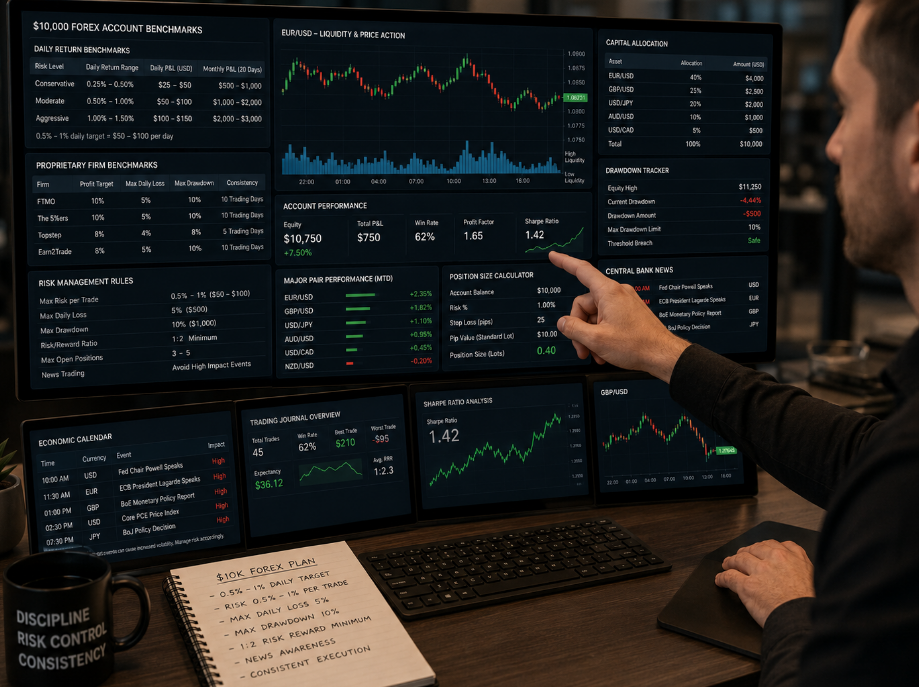
Impact of Scalping and Momentum Trading strategies on earnings
In Forex Trading, scalping and momentum trading strategies change the earnings game through fast short-term techniques.
Scalping Structure
Spread impact grows fast
3–10 pips per move
10–50 trades daily
High Trade Frequency
Tiny Targets
Cost Sensitivity
Momentum Framework
Tight trailing stops
News-driven bursts
Breakouts on major sessions
Trend Identification
Volatility Expansion
Risk Compression
Scalping in forex trading can boost daily totals, yet commissions and slippage bite. Momentum trading forex setups can land bigger wins, though patience is tested.
Many retail traders refine these approaches while using cashback models from EasyCashBackFx to offset transaction costs. In foreign exchange trading, trimming expenses can quietly lift net earnings. Even small rebates stack up over months of disciplined Forex Trading.
Data Scenario: $10K Traders Target 0.4% Daily
Forex Trading sounds flashy online, but real talk—it’s about math, discipline, and data. In foreign exchange trading, steady gains often beat wild bets. With $10K accounts, small daily edges compound fast. Let’s break down how forex trading performance shows up in real numbers and what actually drives those returns.
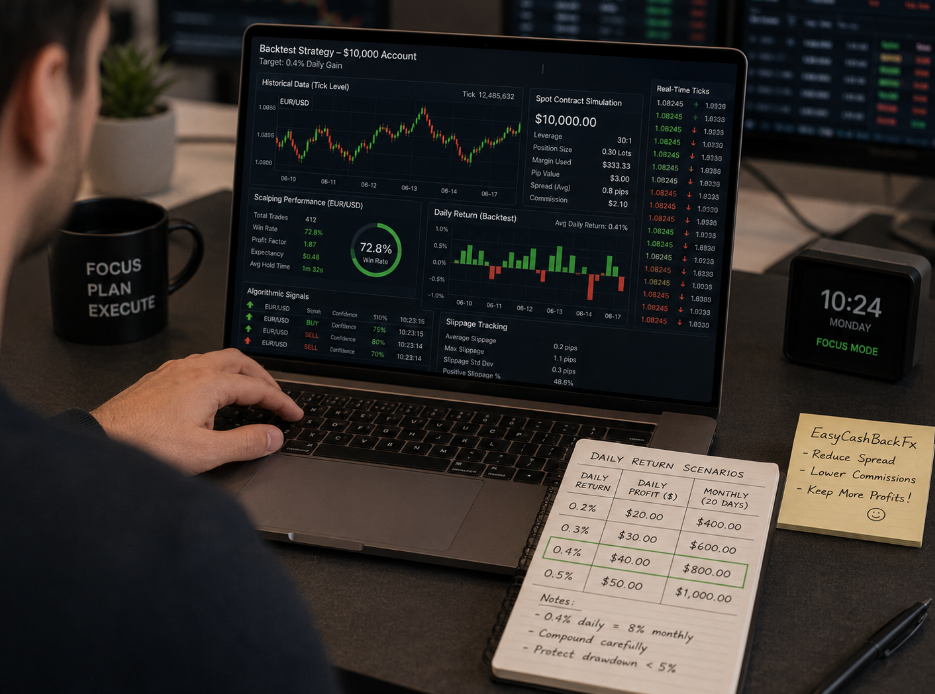
Backtesting Historical Data on Spot Contracts returns
In Forex Trading, proof starts with backtesting. Clean historical data from major pairs feeds the simulation engine.
Core evaluation framework:
Rule-based performance metrics
Risk-adjusted returns tracking
Verified spot pricing feeds
Tick-level data cleaning
Data integrity
Strategy structure
Typical outcome pattern:
Fixed % exposure per contracts traded
0.2%–0.5% average daily returns
Small, repeatable edges
Controlled downside
Forex trading isn’t magic. It’s disciplined modeling inside structured foreign exchange trading systems. EasyCashBackFx helps traders reduce cost drag, which protects those tight statistical edges.
Real-time Market Data revealing Scalping success rates
Live real-time feeds change everything in forex trading.
Execution layer:
High-liquidity sessions
Volatility-aware entries
Faster execution routing
Slippage monitoring
Direct market access
Spread control
Scalping performance drivers:
Micro volatility bursts
Consistent scalping rules
Measured success rates over large samples
Retail trading remains highly sensitive to execution quality, cost efficiency, and risk control, while the SEC day trading warning makes clear that many day traders suffer severe losses before reaching consistency.
In foreign exchange trading, milliseconds matter. That’s why many traders pair tight strategies with EasyCashBackFx to offset spread costs in high-frequency forex activity.
Analyst Reports highlighting Algorithmic Trading yields
Professional analyst insights focus on structure, not hype.
Automation stack:
API-driven trading automation
Risk throttling controls
Statistical models
Signal filtering layers
Algorithmic logic engines
Trade deployment
Yield characteristics:
Trend-following
Mean-reversion strategies
Micro yields accumulated daily
Strategy clustering
Forex Trading at scale often blends human oversight with machine precision. In currency trading, automation smooths emotions, while cost rebates from EasyCashBackFx quietly improve net results. That’s how steady 0.4% target days start looking realistic instead of hype.
5 Steps: Grow Your $10,000 Forex Trading Account
Growing a $10,000 account in Forex Trading takes more than hype. Smart forex trading blends discipline, timing, and solid tools. In the forex market, small mistakes snowball fast. Currency trading rewards patience. Online trading feels simple at first, yet real growth in FX trading demands structure, control, and staying legit.
Step 1 – Selecting the right Trading Platform
In Forex Trading, your Trading platform is your battlefield. The right Brokerage and Software stack can quietly shape every forex trade you place.
Core infrastructure
Real-time quotes keep currency trading decisions sharp.
Depth of market helps gauge liquidity.
Fast fills reduce slippage in volatile forex trading hours.
ECN routing improves pricing transparency.
Order execution
Data feed
Trader experience
Multi-timeframe charts strengthen technical forex analysis.
Built-in indicators support smarter Forex Trading setups.
Clean layout avoids costly click errors.
Custom dashboards support focused FX trading.
User interface
Charting tools
Many traders pair strong platforms with cashback models like EasyCashBackFx to reduce trading costs. Lower spreads and forex rebates quietly support long-term Forex Trading growth.
Step 2 – Applying Position Sizing with Stop-Loss Orders
In forex trading, survival beats bravado. Position sizing and a strict Stop-loss order define your edge.
Risk control framework
Spread funds across uncorrelated setups in Forex Trading.
Limit exposure per trade to a small slice of capital.
Align risk with account balance changes.
Risk management
Capital allocation
Trade mechanics
Predefine stop distance before entry.
Accept loss quickly; protect long-term currency trading capital.
Adjust lot size based on Volatility in the forex market.
Trade size
Exit strategy
Consistent FX trading growth comes from steady math, not gut feelings.
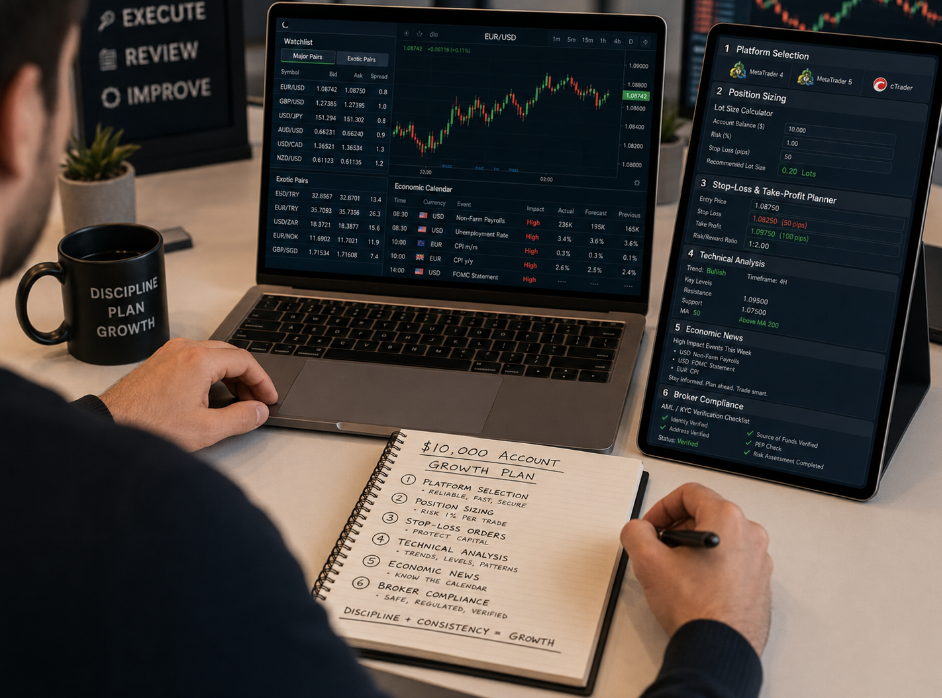
Step 3 – Combining Technical Analysis and News Feeds
Strong Technical analysis reads Chart patterns and momentum. Smart traders also track News feeds, Economic indicators, and Fundamental analysis to read Market sentiment in Forex Trading.
Charts show structure.
Headlines trigger volatility.
Data shapes expectations.
A clean Trading strategy blends both. During major central bank weeks, forex trading moves fast.
The BIS 2025 Triennial Survey reported that global OTC FX trading reached $9.6 trillion per day in April 2025, highlighting how macro data releases continue to drive sharp short-term price swings.
That scale explains why currency trading reacts instantly to inflation prints or rate decisions. EasyCashBackFx users often combine technical setups with forex economic calendar workflows to stay sharp in online trading.
Step 4 – Diversifying across Major and Exotic Currency Pairs
Not all pairs move alike in Forex Trading.
Pair classification
Wider spreads
Higher Risk exposure and sharp swings
High Market liquidity
Tighter spreads for active forex trading
Major currency pairs
Exotic currency pairs
Portfolio view
Adjust weightings as trends shift.
Avoid stacking similar USD exposure.
Balance majors for stability.
Add selective exotics for volatility bursts.
Diversification
Currency correlation
Asset allocation within FX trading
Smart Portfolio management keeps your Forex Trading account from leaning too heavily on one macro theme.
Step 5 – Ensuring compliance with AML Regulations and KYC Procedures
Clean trading matters. In Forex Trading, AML regulations and KYC procedures protect both trader and broker.
Compliance essentials:
Identity verification keeps accounts secure.
Due diligence reduces fraud risks.
Respect for Legal requirements builds trust.
Practical impact on currency trading:
Faster withdrawals when documents are clear.
Stable relationships with regulated brokers.
Alignment with global Regulatory compliance standards.
Solid Anti-money laundering controls may feel boring, yet they keep your Forex Trading journey steady. Many traders using EasyCashBackFx prefer best forex brokers operating under strict oversight, keeping online trading transparent and above board.
Top 4 Risks in $10K Day Trading
Running a $10K account in Forex Trading feels exciting, but fast-paced currency trading can flip quickly. In Forex trading, small gaps turn big. Here’s what can trip you up in FX trading.
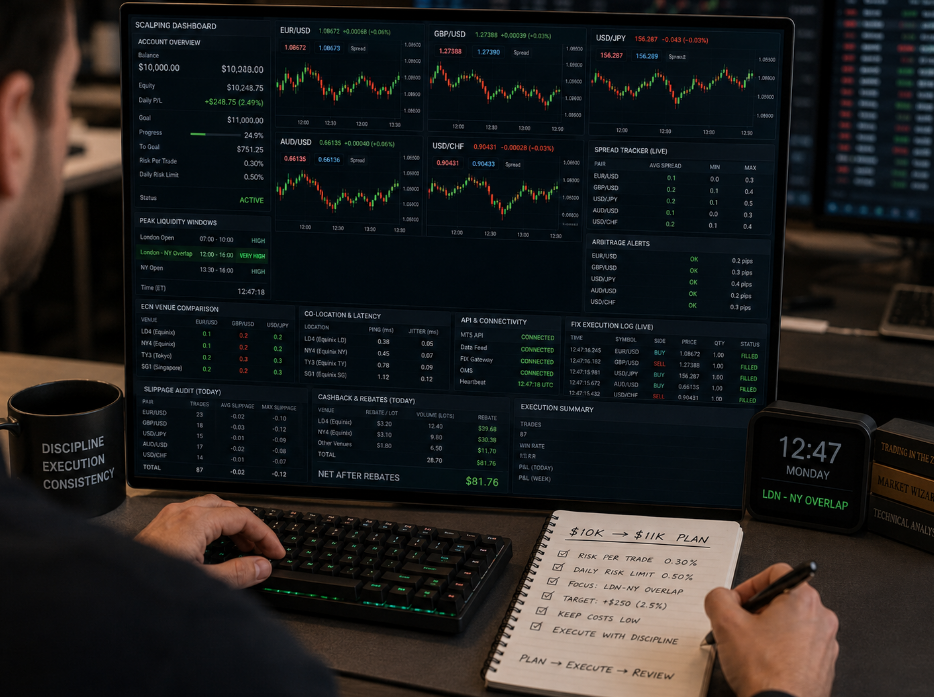
Hedging missteps and Counterparty Risk
In Forex Trading, a shaky Hedging strategy can quietly increase Market exposure instead of lowering it.
Core risk layer
Over-hedging during high Market volatility
Under-hedging due to Operational error
Misaligned Financial contract size
Counterparty layer
Weak prime broker balance sheet
Hidden Default risk in liquidity chains
Rising Counterparty exposure
In currency trading, your Risk management plan must check broker stability, margin terms, and hedge ratios. EasyCashBackFx helps traders compare broker reliability while staying active in Forex Trading without stacking unnecessary exposure.
Margin Requirements and Value at Risk pitfalls
A $10K Forex trading account plus high Leverage can spiral fast.
Underestimating Capital requirement
Thin buffer before a Margin call
Weak Risk assessment
Poor Portfolio risk modeling
Ignoring liquidation triggers
Forced Liquidation during spikes
In Forex Trading and broader online trading, tracking Market exposure daily keeps margin stress under control. EasyCashBackFx users often pair cashback savings with tighter risk caps to stay steady in FX trading.
Latency challenges in low-latency networks
In Forex Trading, milliseconds matter.
Execution speed depends on
Clean Data transmission
Stable Network infrastructure
Efficient Order routing to the right Trading venue
Accurate Market data for Algorithmic trading
Slow System performance means missed scalps and sloppy fills. For active Forex trading accounts, broker tech stacks matter. EasyCashBackFx makes it easier to pick platforms tuned for fast currency trading.
Regulatory hurdles under MiFID II
Forex Trading in Europe sits inside tight Financial regulation.
Regulatory compliance
Strict Reporting obligations
Higher Market transparency
Caps supporting Investor protection
Clear rules on Market structure
MiFID II shapes how Forex trading firms handle client funds and disclosures, while ESMA CFD measures set leverage limits and retail protections for CFD products. For traders scaling Forex Trading across borders, knowing these rules keeps your FX trading smooth and legit.
Comparative: Forex Trading vs. Stock Scalping
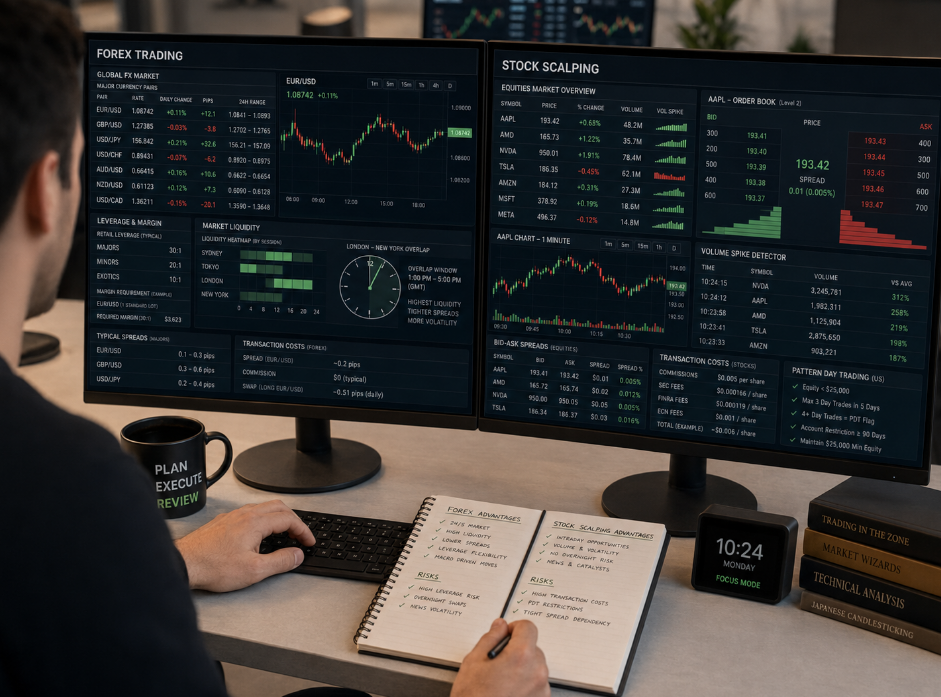
Forex Trading and stock scalping both chase short-term price moves, yet the way money flows through each market feels totally different. From global currency pairs and shifting exchange rates to fast equity tape reading, this comparison breaks down how Forex trading stacks up against stock scalping in real-world conditions.
Forex Trading
In Forex Trading, the action runs nearly nonstop across global market hours, built around banks, ECNs, and deep interbank liquidity.
Core Market Structure
Macro data, rate decisions, geopolitical news.
High volatility during London–New York overlap.
Driven by exchange rates between major currency pairs like EUR/USD.
Measured in pips, where small changes can mean serious cash with proper leverage.
Pricing Mechanics
Volatility Drivers
Trading Conditions Overview
| Feature | Major Pairs | Minor Pairs |
|---|---|---|
| Avg Spread (pips) | 0.1–1.0 | 1.0–3.0 |
| Daily Volume (USD) | > $1T | < $200B |
| Peak Liquidity Hours | 13:00–17:00 UTC | 07:00–16:00 UTC |
Practical Edge
24-hour access supports active Forex trading routines.
Cashback models like EasyCashBackFx help reduce cost per trade in online currency trading.
High liquidity means smoother execution during fast Forex Trading sessions.
Forex trading suits traders who like macro themes, tight spreads, and flexible hours.
Stock Scalping
Stock scalping lives inside exchange systems, focused on equities and rapid-fire moves in individual shares.
Execution Environment
Short bursts of price action.
Decisions shaped by technical analysis indicators.
Traders read the order book, tracking shifts in bid-ask spread.
Heavy volume often signals breakout setups.
Order Flow
Price Behavior
Constraints and Costs
Pattern day trading rules may apply.
Exchange and routing fees cut into gains.
Dark pool activity can distort visible volume.
In contrast to Forex Trading, stock scalping depends on micro-structure speed. Fewer global drivers, more tape reading. Some traders even fund equity strategies with profits from Forex Trading, balancing currency markets with fast equity plays.
Scenario: Turning $10,000 into $11,000 Quickly
Forex Trading sounds simple—buy low, sell high—but fast gains demand sharp timing and tighter control. In real-world forex trading, capital growth from $10,000 to $11,000 hinges on precision, cost control, and smart tech. This Forex market game rewards speed, discipline, and the right partners like EasyCashBackFx.
Scalp Major Currency Pairs during peak liquidity windows
In Forex Trading, short bursts often beat long waits. When Liquidity peaks during key Market Hours, scalping becomes a focused Trading Strategy inside active Currency Pairs.
Core Pair Selection
Deep Liquidity
Stable spreads
EUR/USD
GBP/USD
Major Forex pairs
Why majors?
Timing Stack
CPI
NFP
13:00–16:00 UTC
London–New York overlap
News-aligned Volatility
Execution Framework
1–5 minute charts
Tight stop placement
Spread tracking
Recent BIS Triennial Survey 2025 data shows the US dollar remained on one side of 89.2% of global FX trades, supporting high-frequency Forex trading strategies in major dollar pairs.
| Pair | Avg Spread (pips) | Peak Volume (USD bn) | Active Session | Volatility Index |
|---|---|---|---|---|
| EUR/USD | 0.6 | 1,200 | London/NY | 7.5 |
| GBP/USD | 0.8 | 650 | London/NY | 8.1 |
| USD/JPY | 0.7 | 900 | Tokyo/London | 6.9 |
| AUD/USD | 1.0 | 400 | Sydney/Tokyo | 6.2 |
| USD/CHF | 0.9 | 350 | London | 5.8 |
Lower spreads plus cashback through EasyCashBackFx keep net costs lean in active Forex Trading.
Exploit Arbitrage across ECNs and Dark Pools
Arbitrage in Forex trading is about spotting small Price Discrepancies before the crowd does.
Scan multiple Electronic Communication Networks.
Monitor hidden liquidity inside Dark Pools.
Compare tick feeds across Execution Venues.
Sync market data.
Detect micro Market Inefficiencies.
Trigger high-speed orders.
Latency matters.
Discipline matters more.
The FX Global Code emphasizes transparent, fair, liquid, open, and resilient FX market conduct, including good practice principles for execution, infrastructure, and market behavior.
That’s pure edge in Forex Trading. With consistent rebates from EasyCashBackFx, even tight arbitrage margins feel less squeezed.
Speed execution with API Connectivity and co-location services
Speed turns average currency trading into high-performance Forex Trading.
Infrastructure Layer
Direct cross-connects
LD4 (London)
NY4 (New York)
Data Centers
Co-location racks
Connectivity Layer
REST for monitoring
FIX for execution
Application Programming Interface access
Direct Market Access gateways
Performance Metrics
<1 ms internal routing
Low Latency targets
Slippage audits
Fill ratio tracking
When Execution Speed improves, spread capture tightens. Solid Trading Technology keeps orders clean, especially during volatile Forex market spikes. Add consistent cashback via EasyCashBackFx, and every pip in Forex Trading works harder toward that $11,000 goal.
References
[BIS Triennial Central Bank Survey of foreign exchange and OTC derivatives markets in 2025 - https://www.bis.org/statistics/rpfx25.htm]
[BIS Triennial Central Bank Survey 2025: OTC foreign exchange turnover in April 2025 - https://www.bis.org/statistics/rpfx25_fx.pdf]
[SEC Day Trading: Your Dollars at Risk - https://www.sec.gov/about/reports-publications/investorpubsdaytipshtm]
[CFTC Foreign Currency Trading - https://www.cftc.gov/LearnAndProtect/AdvisoriesAndArticles/ForeignCurrencyTrading/index.htm]
[CFTC Swaps Execution Facilities - https://www.cftc.gov/IndustryOversight/TradingOrganizations/SEF2/index.htm]
[ESMA adopts final product intervention measures on CFDs and binary options - https://www.esma.europa.eu/press-news/esma-news/esma-adopts-final-product-intervention-measures-cfds-and-binary-options]
[FX Global Code - https://www.globalfxc.org/fx-global-code/]
[Day Trading for a Living? - https://papers.ssrn.com/sol3/papers.cfm?abstract_id=3423101]
[FINRA Day Trading - https://www.finra.org/investors/investing/investment-products/stocks/day-trading]
FAQ
How do Institutional Investors and Proprietary Trading Firms shape Forex Trading performance standards?
Institutional Investors, Hedge Funds, and Proprietary Trading Firms move size through the Interbank Market, and that size sets the tone for everyone else.
Capital scale defines realistic return expectations.
Strict Value at Risk models and Margin Requirements limit reckless exposure.
Performance is benchmarked against Major Currency Pairs traded via Prime Brokers and Liquidity Providers.
Retail traders often mirror these standards, tracking Institutional flows through Real-time Market Data and Central Bank Announcements to avoid trading against dominant momentum.
Why are Major Currency Pairs central to consistent Forex Trading income?
Major Currency Pairs dominate Spot Contracts and Currency Futures volume across Electronic Communication Networks (ECNs).
Deep liquidity reduces spreads.
Faster execution through Low Latency Networks and Co-location Services improves fill quality.
Stable pricing behavior supports Scalping and Momentum Trading.
Exotic Currency Pairs may tempt with volatility, yet higher Counterparty Risk and wider spreads can quickly erode gains. Many Asset Managers prefer majors for disciplined Position Sizing and tighter Stop-Loss Orders.
How do technology and execution venues affect Forex Trading results?
Speed and access often separate profit from regret.
Trading Platforms connect through API Connectivity to Execution Management Systems and Order Management Systems housed in major Data Centers. Orders route to ECNs, MTFs, or directly to Liquidity Providers.
Large tickets may pass through Prime Brokers or even Dark Pools. Certain derivatives clear via Swap Execution Facilities (SEFs).
High-Frequency Trading and Algorithmic Trading depend on this structure; a delay of milliseconds can turn a winning Arbitrage into a missed opportunity.
What risk and compliance factors protect long-term Forex Trading success?
Risk controls include Stop-Loss Orders, Position Sizing, Hedging with Currency Options or Forward Contracts, and Diversification across Cross Currency Pairs.
Compliance frameworks require AML Regulations and KYC Procedures, MiFID II and the Dodd-Frank Act Reporting Requirements, and Licensing under recognized Regulatory Bodies to build trust with Multinational Corporations and Investment Banks.
Behind every steady equity curve stands strict control—financial, technical, and regulatory.