


Making serious forex profits isn’t just about crunching numbers—it’s like running a busy street market. You need the right timing, sharp eyes, and nerves of steel. Wholesale traders feel this pinch every day, juggling market swings while trying to keep profits steady.
Some days, it feels like the market is playing hide-and-seek with your money. One wrong move and your gains vanish in a blink. That’s why risk management isn’t optional—it’s your safety net.
Consistency beats luck any day. Simple strategies, followed patiently, keep profits coming—especially when traders also reduce costs through forex rebates.
Let’s talk about keeping your forex profits rolling even when markets swing like a Mumbai local train at peak hours. Daily habits, smart decisions, and knowing when to step back make all the difference.
By the end of this read, you’ll know which moves actually matter and which are just noise. Think of it as a trader’s cheat sheet—short, sharp, and built for people who deal in bulk and want real results.
Struggling with forex profits? Risk management strategies that work
That’s why risk management isn’t optional—it’s your safety net.
5 tips to sustain forex profits during market uncertainty
Staying chill and informed keeps your profits from taking a nosedive.
Forex profits vs. Stock gains: Which performs better?
Performance Comparison for wholesale traders boils down to timing, risk appetite, and capital allocation—mixing both may sometimes be the sweet spot.
Struggling with forex profits? Risk management strategies that work

Understanding Maximum Drawdown in Wholesale Forex Trading
Maximum Drawdown is your wake-up call in wholesale forex. Track performance metrics to see how deep your equity curve can dip. Protecting capital means spotting trading losses before they snowball. Quick tips: monitor historical drawdowns, compare daily fluctuations, and always have a backup plan. Wholesale forex traders who keep tabs on drawdowns can avoid nasty surprises and stay in the game longer.
Using Stop Loss Orders to Protect Large Positions
Stop Loss Orders are your best buddies when handling large positions. They limit risk and preserve capital during wild swings. Simple strategies:
Place orders slightly below support levels.
Adjust as volatility shifts.
Ensure exit strategy fits your trading horizon.
This kind of order management keeps your portfolio intact, even if the market throws curveballs.
Applying Take Profit Orders for Consistent Net Profit
Take Profit Orders help lock in net profit like a pro. Setting clear price targets ensures consistent returns without constantly staring at screens. Break it down: define trade goals, plan exit strategy, manage trade size, and test scenarios with a forex profit calculator. Profits realized regularly = calmer trading days and happier wholesale forex accounts.
Position Sizing Techniques for Institutional Investors
Position sizing is where the big players shine. Institutional investors allocate risk wisely, mixing Kelly Criterion and fixed fractional methods to manage capital and portfolio balance. Use calculated sizing: too small = missing profit, too large = risky drama. Smart capital management keeps you playing the long game.
Risk-Reward Ratio Analysis for Cross Rates and Major Currency Pairs
Check your risk-reward ratio to see if a trade is worth it. Analyze cross rates and major currency pairs for entry/exit points. Crunch the numbers: higher ratio = better profit potential, lower ratio = watch out. Trade analysis ensures your strategy isn’t just luck—it’s a calculated move.
Leveraging Trailing Stops in Day Trading Strategies
Trailing Stops protect profits on the fly. As day trading swings happen, adjust stops to lock gains and reduce exposure. Combine strategy optimization with volatility adjustment and watch trade management turn messy charts into controlled wins. Traders love the freedom: profits stay safe while trades breathe.
Margin Call Management for Wholesale Brokers
Margin calls can ruin a day if you’re unprepared. Wholesale brokers need risk mitigation tools, account monitoring, and capital adequacy checks. Keep an eye on leverage and margin requirements. Quick fixes: reduce positions, monitor liquidation risk, and stay proactive. Smart management = fewer surprises and steadier profits.
5 tips to sustain forex profits during market uncertainty
Monitoring Interest Rate Decisions and CPI for Profit Stability
Keep an eye on interest rates and CPI updates from central banks; sudden moves can shake profits.
Track economic data regularly to anticipate inflation spikes.
Adjust trading positions to maintain profit stability when monetary policy shifts.
Quick tip: small tweaks in exposure beat panic exits during surprises.
Staying chill and informed keeps your profits from taking a nosedive.

Swing Trading with Major and Minor Currency Pairs
Identify Major currency pairs and Minor currency pairs with consistent price swings.
Use technical analysis to spot trends and entry points.
Follow price action and ride moves rather than fight the trend.
Manage market volatility with stop-losses and careful position sizing.
Remember: patience beats chasing every spike in forex pairs.
Hedging with Currency Futures and Currency Options
Swing your risk game: hedging using currency futures and currency options can soften nasty shocks.
Combine derivatives with careful risk management to protect your forex exposure.
Think of it as insurance: a little premium now saves a whole lot of stress later.
Mix in small positions of financial instruments to balance risk without killing upside.
Diversifying with Spot Metals and Exotic Currency Pairs
Add spot metals like gold and silver for safe havens.
Sprinkle in exotic currency pairs from emerging markets for extra growth juice.
Maintain portfolio management balance; don’t put all eggs in one basket.
Quick wins: small exposure across diversification keeps profits afloat when major markets wobble.
Trend Following Using Technical Analysis Tools
Use trend following to ride market momentum with technical analysis.
Monitor moving averages, support/resistance, and chart patterns to spot shifts.
Keep your forex trading strategy flexible; markets can flip fast.
Combine indicators for confirmation but avoid overcomplicating signals.
Riding the trend smartly keeps market trends working for your profits.
Maintaining Win Rate and Sharpe ratio During Volatile Markets
Track win rate to see which trades actually pay off.
Use Sharpe ratio to gauge risk-adjusted returns in volatile markets.
Apply consistent risk management to protect gains.
Review trading performance weekly; adjust positions based on profitability.
Smart monitoring ensures your gains survive market swings without overexposing your portfolio.
Forex profits vs. Stock gains: Which performs better?

Comparing ROI of Major Currency Pairs and Blue-Chip Stocks
ROI is king when chasing serious profits. Major Currency Pairs like EUR/USD or GBP/JPY often show lightning-fast swings, while Blue-Chip Stocks move slower but offer steady gains. In the Forex Market, short-term volatility can pump Investment Returns, but Stock Market stability provides predictable performance. Performance Comparison for wholesale traders boils down to timing, risk appetite, and capital allocation—mixing both may sometimes be the sweet spot.
Pip Value Impact on Wholesale Trading Returns
Pip Value directly affects Trading Returns on Major and Minor Currency Pairs.
Lot Size choices magnify profits or losses—big bets, big swings.
Leverage can turn tiny moves into fat gains, but margin calls lurk around the corner.
Always check Profit/Loss after every trade to avoid nasty surprises.
Liquidity Providers’ Role in Forex Profit Efficiency
Liquidity Providers in the Forex Market keep trades flowing smooth. Tighter Bid-Ask Spread equals better Profit Efficiency for wholesale traders. ECN Brokers use deep Market Depth to boost order execution speed, cutting slippage. If the market’s choppy, Liquidity Providers’ ability to fill orders fast can make the difference between a winning and losing day.
Realized Gain vs. Unrealized Profit Metrics
Realized Gain is the cash you can pocket today, while Unrealized Profit is more like a flex—on paper but not in the bank. Profit Metrics let wholesale traders track performance, using Portfolio Valuation and Mark-to-Market methods to see true capital movement. Accounting Standards guide how you report this, and understanding Capital Gains ensures smarter reinvestments.
Daily trading: Maximizing forex profits in volatile markets
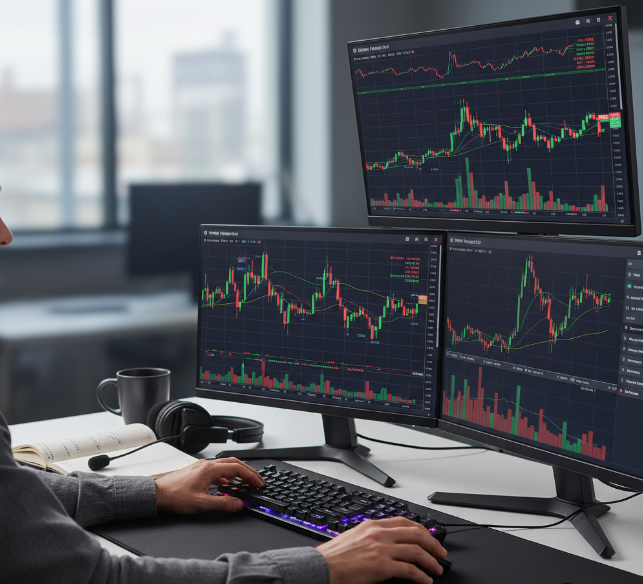
Scalping Techniques for Institutional Investors
High-frequency trading is king in intraday moves. Institutional investors ride liquidity pools, watching bid-ask spreads and order flow. Arbitrage setups pop up fast, but slippage can bite if execution speed lags. Pro tip: always monitor execution platforms for delays; missing milliseconds can shave off sweet profits.
Focus on top-tier liquidity providers.
Track order flow to anticipate sudden spikes.
Keep spreads tight; small gains add up.
Use arbitrage only on highly correlated pairs.
Using Moving Averages and RSI for Short-Term Trades
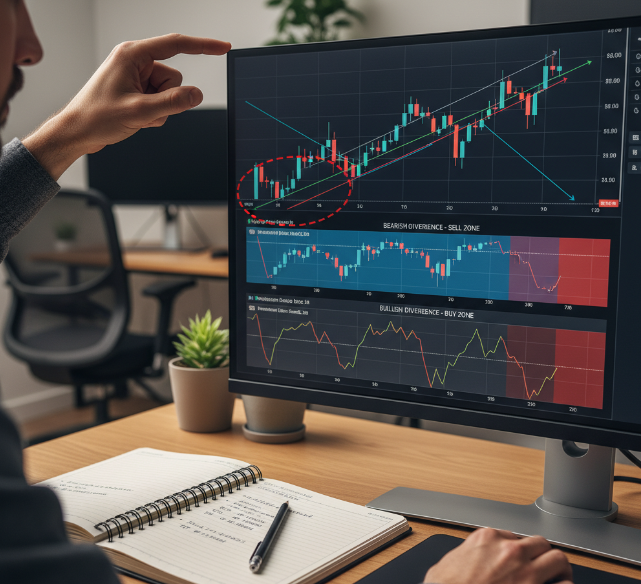
Short-term trades get juicy with Exponential Moving Average and Relative Strength Index combos. Overbought and oversold signals hint at reversals, while convergence/divergence flags trend changes. Pair EMA with RSI to spot when the market’s about to flip.
Apply EMA on 5-min and 15-min charts.
Watch RSI above 70 (overbought) or below 30 (oversold).
Confirm trend reversal with convergence patterns.
Exit trades early if divergence shows weakness.
Central Banks’ Market Influence on Daily Profitability
Daily profits are often at the mercy of the Federal Reserve and other central banks. Interest rate moves, hawkish or dovish signals, and monetary policy shifts like quantitative easing can make your positions soar or sink.
Across macro research and broker education, the message is consistent: understanding policy moves is half the battle. Inflation reports and surprise rate tweaks often trigger volatility bursts, perfect for nimble traders. Keep your ears open during policy meetings—your P&L depends on it.
Track interest rates and policy announcements.
Anticipate hawkish/dovish comments for market swings.
Combine insights with short-term trend analysis.
Cross Rates Opportunities in Intraday Trading
Cross rates like EUR/GBP open doors for pip-hungry traders. Watch base currency correlations and intraday volatility to snag quick profits. Exchange rate swings can be wild, so timing entry points is crucial.
Focus on high-volatility currency pairs for intraday scalps.
Monitor pip value shifts across correlated pairs.
Track base currency strength and weakness.
Exploit short-term correlation breakdowns for rapid gains.
Candlestick Charting Patterns to Optimize Position Trading
Candlestick patterns are your daily compass. Doji signals hesitation, Hammers show potential flips, and Engulfing patterns scream trend reversals. Combine with support and resistance, trendlines, and bullish/bearish price action for maximum clarity.
Identify Doji at key support/resistance levels.
Confirm Hammers with trendline direction.
Spot Engulfing patterns to anticipate major swings.
Trade with the flow of bullish or bearish momentum.
Can forex profits truly grow in 2026?
Mix of Forecasts for Forex market trends & Growth potential
| Indicator | 2025 Recap | 2026 Expectation | What It Means for Traders |
|---|---|---|---|
| Global GDP Growth | Around 3% territory | Growth remains uneven but resilient | Slower economies can squeeze some pairs, but they also create trend setups |
| Central Bank Rate Paths | Mixed | Divergent policies remain | More trend swings and volatility can fuel trading strategies |
| Forex Liquidity | Deep | Structural turnover remains strong | Deep liquidity helps larger players move without wrecking prices |
| Dollar Strength | Mixed | Policy and growth differentials still matter | Non-USD majors may keep seeing opportunity |
| Risk Sentiment | Fragile | Geopolitics can still trigger whipsaws | Volatility remains trader fuel, not fear gas |
So yeah, the market’s upside is still very much alive — just not a straight line to riches.
The broader backdrop still supports that view. The IMF World Economic Outlook continues to frame the global economy as slower but still active, while the BIS Triennial Central Bank Survey shows that FX remains one of the deepest markets in the world, with daily turnover above $7 trillion.
What Industry Pros Say
The most credible takeaway from market research in 2026 is not that profits are easy—it’s that profitability still depends on real drivers. Interest rate decisions, inflation data, and central-bank divergence matter far more than hype.
Where’s the edge really? Not flashy bots on their own. Solid macro sense, disciplined execution, and trend-following on liquid pairs like EUR/USD or USD/JPY still beat blind scalping on many days.
Risk stuff is still a huge deal. Stop losses and smart position sizing may not look exciting, but they are what keep accounts alive long enough to compound.
This echoes what serious traders keep repeating: the skill now is in discipline, not gimmicks.
Three Reasons Profitability still has a Pulse in 2026
Macro Movers Drive Volatility
With diverging central bank moves, GDP swings, and inflation news slipping through the headlines, the market sees bigger swings than a cricket match in the last over—sweet for opportunistic traders.
Liquidity Still King
The Forex market literally dwarfs many other markets. According to the BIS Triennial Central Bank Survey, daily FX turnover is massive, so you can enter and exit without slippage eating your gains… if you know what you’re doing.
Risk Savvy Beats Luck
Traders who keep risk tight and ready—using well-placed stop losses and thinking about realistic profit and loss—generally make more consistent returns than those chasing instant wins.
Conclusion
2026 is shaping up to be a rollercoaster in the Forex market. With global economies wobbling and central banks throwing curveballs, the key takeaway is simple: staying sharp and reading the market like your favorite cricket match matters. Traders who follow trends, watch economic forecasts 2026, and plan moves carefully are likely to ride the waves rather than get washed away.
Pick trading strategies that suit your style, like scalping or position trading.
Use stop loss and trailing stops to protect your stash.
Keep an eye on big players like hedge funds and liquidity providers.
Track profit metrics such as net profit and Sharpe ratio to stay on top.
Forex profits are still very much on the table, but only if you respect the game. Think of it like cooking—the right ingredients, timing, and spice make the dish memorable; miss one, and the flavor falls flat.
At the end of the day, smart moves, disciplined trading, and keeping risk tight make all the difference. Treat your trades like your own small business—watch every rupee and plan for bumps along the road. Traders who want to improve net results can also lower friction with forex rebates, model setups with a forex profit calculator, track releases with the economic calendar, and keep improving through learn forex trading.
References
[BIS Triennial Central Bank Survey 2022 - https://www.bis.org/statistics/rpfx22.htm]
[IMF World Economic Outlook - https://www.imf.org/en/Publications/WEO]
[Federal Reserve Monetary Policy - https://www.federalreserve.gov/monetarypolicy.htm]
[U.S. Bureau of Labor Statistics CPI - https://www.bls.gov/cpi/]
[CME Group FX Markets - https://www.cmegroup.com/markets/fx.html]
[Investopedia Sharpe Ratio - https://www.investopedia.com/terms/s/sharperatio.asp]
FAQ
How can forex profits be maximized in 2026?
Ride trends in Major Currency Pairs like EUR/USD or USD/JPY.
Use Stop Loss and Trailing Stop to protect your cash.
Watch Interest Rate Decisions and CPI for timing trades.
Keep an eye on Net Profit and Sharpe Ratio.
Which trading strategies are most profitable for wholesale traders?
Swing Trading and Position Trading usually give steady wins. Pair these with Technical Analysis and check moves by Central Banks or Institutional Investors for best results.
What factors affect forex profits the most?
Market swings from GDP or Unemployment updates.
Liquidity from Market Makers and Hedge Funds.
Regulations shaping trade rules.
Position Sizing and Maximum Drawdown control.
How can Risk management improve trading outcomes?
Using Stop Loss, Take Profit, and Margin Calls keeps your cash safe. Watching Forex market trends and Profitability factors helps avoid big losses.
Are forex profits sustainable during market uncertainty?
Track Non-Farm Payrolls, Trade Balance, and Retail Sales for signals.
Hedge with Currency Futures and Options.
Diversify into Minor and Exotic Currency Pairs.
Switch strategies like Scalping or Carry Trade as needed.
How do Major Currency Pairs compare to Exotic Currency Pairs?
Majors give steady moves and tight spreads, while Exotics can swing more. Both need careful risk management and watching Market volatility closely.
Can Profit metrics guide better trading decisions?
Check Net Profit and ROI to see which trades are working.
Track Win Rate and Profit Factor for consistency.
Use Pip Value to tweak positions.
Compare Realized Gain vs. Unrealized Profit.
What role do Economic forecasts 2026 play in trading?
GDP, Interest Rate Decisions, and CPI help traders predict moves. Planning trades around these keeps forex profits from slipping away.
How do Market participants influence forex profits?
Central Banks shape liquidity and currency strength.
Hedge Funds and Investment Banks stir short-term swings.
Retail Traders add momentum in smaller pairs.
Liquidity Providers keep trade execution smooth.
Which tools are essential for consistent trading success?
Stop Loss, Take Profit, and Trailing Stops, along with Moving Averages and Candlestick Charting, keep trades safer and boost steady forex profits.