


Forex Trading is chaos without a playbook, and the 3-5-7 rule cuts through the noise fast.
The Bank for International Settlements reported in its 2022 Triennial Survey that global FX turnover reached $7.5 trillion per day, underscoring the scale and liquidity driving disciplined strategies.
Structure beats guesswork in real markets today.
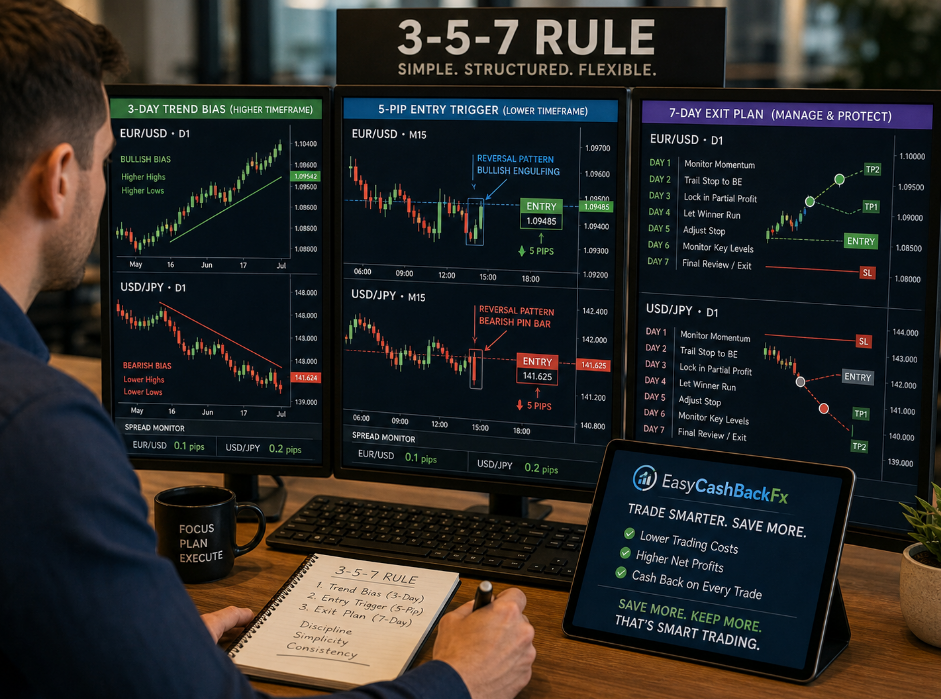
3-5-7 Rule
Shape a 3-day bias, target 5-pip entries, plan 7-day exits for disciplined setups.
Risk Controls
Apply Value at Risk stress tests, forward contracts and counterparty screening to cap losses.
Tech Integration
Leverage ECNs, Trading APIs and FIX Protocol for automated, low-latency execution.
Unlock The 3-5-7 Rule: Simplify Your Forex Trading Strategy
The 3-5-7 rule trims the noise from Forex Trading and gives your trading routine a clean structure. If Forex trading feels messy or overcomplicated, this approach brings it back to basics without killing flexibility.
Why Spot Currency Pairs Are Ideal for 3-5-7 Setups
In Forex Trading, spot markets make the 3-5-7 logic practical because the currency market runs almost 24 hours with deep market liquidity.
Core advantages inside the trading environment
Tight spread considerations on major currencies like EUR/USD and USD/JPY
Fast execution speed, which matters for precise 5-pip entries
Clear pair characteristics that support steady volatility analysis
How this supports your strategy framework
Clean trend identification across a defined 3-day time horizon
Reliable signal generation when price respects visible market structure
Easier spotting of reversal patterns during short pullbacks
For traders serious about Forex Trading, using spot FX keeps things simple and cost-efficient. Many active traders also reduce costs through cashback programs like EasyCashBackFx, keeping spreads and commissions from eating into 5-pip targets.
Leveraging Algorithmic Trading to Automate 3-5-7 Rules
Automation tightens discipline in Forex trading.
Inside a structured trading methodology
3-day data scan → coded chart analysis rules
5-pip trigger → API-based entry criteria
7-day cap → automated exit criteria
Under the hood of the strategy implementation
Trading APIs connected to FIX for execution
Pre-set risk control linked to position management
Backtested technical tools to confirm each trade setup
Forex Trading becomes less emotional when code handles timing. Pairing automation with cost rebates from EasyCashBackFx keeps the math in your favor.
Institutional Investors’ Adoption of the 3-5-7 Approach
Large funds treat the 3-5-7 idea as a disciplined strategy framework inside diversified portfolios.
Portfolio layer
Defined time horizon rules
Cross-pair market structure comparison
Execution layer
Centralized position management
Strict risk control across correlated pairs
Signal layer
Quant-driven signal generation
Statistical filters for reversal patterns
Institutional desks value repeatable logic. That same logic works in retail Forex Trading too. Keep it structured, track performance, and stack small edges—cost savings included through forex cashback—while staying focused on consistent Forex Trading execution.
Core Elements Of The 3-5-7 Forex Rule
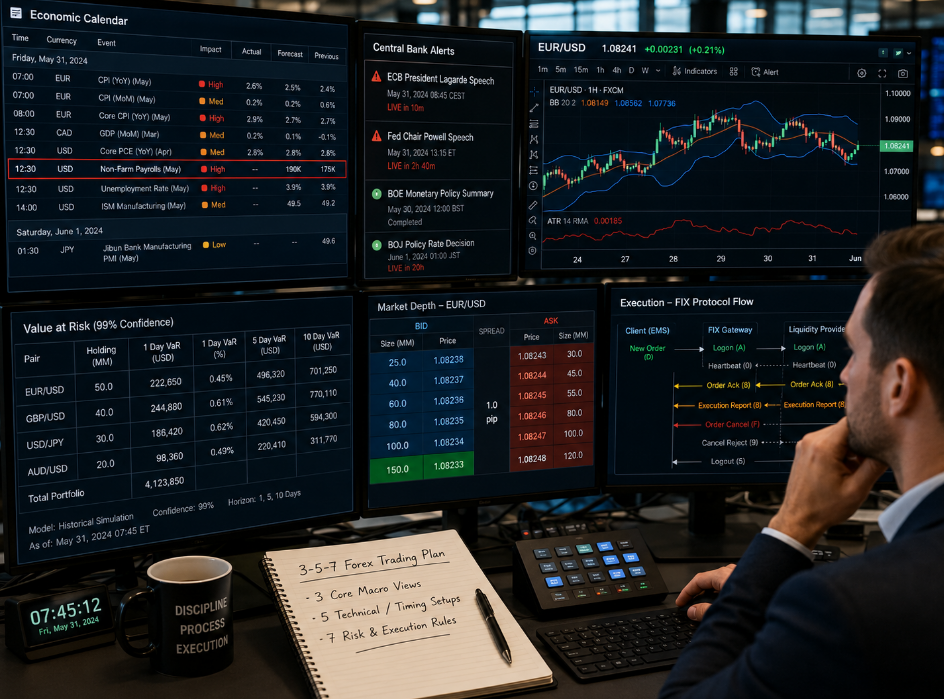
Forex Trading sounds flashy, but real gains in foreign exchange trading come from structure. The 3-5-7 rule keeps currency trading tight: 3-day bias, 5-pip precision, 7-day risk control. In online FX trading, discipline beats hype. This guide breaks down how smart traders align macro views, chart timing, and execution tech—while stacking value with EasyCashBackFx.
Fundamental Analysis: Defining Your 3-Day Outlook
In Forex Trading, your 3-day bias rests on layered inputs:
Macroeconomic Drivers
Rate decisions
Policy statements
CPI releases
Non-Farm Payrolls
Economic Indicators
Central Bank Announcements
Geopolitical Events
Trade tensions
Energy supply shocks
Market Sentiment
Risk-on vs risk-off flows
US Dollar Index (DXY) momentum
For foreign exchange trading, stack the data:
Scan the economic calendar.
Rank events by volatility impact.
Map impact to currency pairs.
That’s how Forex Trading avoids random bets.
Technical Analysis Bands for 5-Pip Entry and Exit
Precision matters in Forex Trading.
Use Bollinger Bands to spot compression.
Track Average True Range (ATR) for volatility.
Check liquidity depth before entry.
Short bursts. Tight spreads. Five pips in, five pips out.
In online Forex Trading, execution speed pairs nicely with cashback models like forex rebates, trimming transaction drag while you scalp inside structured technical analysis zones.
Stress Testing Your 7-Day Hold with Value at Risk
Holding seven days in currency trading demands math, not vibes.
Risk Framework
Rate hike +50 bps
GDP miss
95% confidence interval
99% stress band
Value at Risk (VaR)
Scenario shocks
| Pair | 1-Day VaR | 7-Day VaR | Stress Loss (99%) |
|---|---|---|---|
| EUR/USD | 0.8% | 2.1% | 3.4% |
| GBP/USD | 1.0% | 2.8% | 4.6% |
| USD/JPY | 0.7% | 1.9% | 3.1% |
| AUD/USD | 1.2% | 3.3% | 5.2% |
Forex Trading without risk metrics is just guessing. Structured VaR keeps capital breathing.
Execution Management Systems and FIX Protocol Alignment
Clean execution seals the deal.
Execution Management Systems (EMS) route orders.
FIX Protocol standardizes trade messages.
Real-time confirmations reduce slippage.
Steps flow naturally in Forex Trading:
Strategy signal triggers.
EMS routes via FIX.
Liquidity provider fills.
Confirmation hits your terminal.
Pair efficient routing with EasyCashBackFx and your foreign exchange trading stack gets leaner. Smart structure. Clean fills. Consistent Forex Trading discipline.
5 Tips For 3-5-7 Risk Management
In Forex Trading, risk moves faster than hype. The 3-5-7 model helps traders cap exposure across short holding cycles while staying sharp in currency trading. If you’re active in forex markets, these tactics keep trading discipline tight and losses controlled.
Tip 1: Hedge With Forward Contracts to Cap Losses
When running short-cycle trades in Forex Trading, hedging through Forward Contracts keeps downside in check.
Core Objective
Lock exchange rates in advance
Stabilize 7-day rolling positions
Reduce exposure to Market Volatility
Execution Flow
Identify open currency exposure
Match notional size with forward coverage
Monitor mark-to-market fluctuations
Risk Layering
Basis mismatch
Directional loss
Swap impact
Spot position risk
Forward hedge risk
Smart traders using EasyCashBackFx often pair spot forex trading rebates with hedging tools to cushion cost and risk at the same time.
Tip 2: Monitor Counterparty Risk in Non-Deliverable Forwards
Using Non-Deliverable Forwards in emerging forex markets demands attention.
Counterparty Review
Regulatory standing
Capital adequacy
Settlement reliability
Risk Mapping
Credit exposure size
Jurisdiction transparency
Clearing mechanism
Red Flags
Weak reporting
Limited oversight
In currency trading, one shaky counterparty can wipe out gains from multiple trades.
Tip 3: Use Liquidity Aggregators for Precise Stops
Precision matters in fast Forex Trading sessions.
Infrastructure Stack
Consolidate quotes
From Commercial Banks
From ECNs
Liquidity Aggregators
Stop Optimization
Compare depth-of-market spreads
Place stops beyond liquidity clusters
Reassess during news spikes
Tighter execution reduces Liquidity Risk, especially for short-term forex traders.
Tip 4: KYC & AML Checks to Avoid Operational Risk
Operational slip-ups hurt more than bad entries.
Compliance Shield
Control Structure
Suspicious flow alerts
Document review
Source-of-funds check
Account verification
Ongoing monitoring
EasyCashBackFx promotes compliant broker partnerships, helping Forex Trading participants avoid messy regulatory blowups.
Tip 5: Calculate Market Risk with Stress Testing
Stress testing keeps trading egos grounded.
Scenario Design
Historical crashes
Central Bank surprise moves
Rate shocks
Multi-Step Assessment
Reprice open forex positions
Measure drawdown tolerance
Adjust lot sizing
Risk Metrics
Value-at-Risk bands
Volatility expansion zones
In Forex Trading and broader foreign exchange trading, stress testing turns guesswork into measured control.
How Does 3-5-7 Improve Forex Trading?
Timing can make or break Forex Trading. The 3-5-7 framework adds rhythm to trading forex, blending short holds with smarter capital control. In fast-moving FX markets, structure keeps emotions in check and returns more consistent.

Does the 3-5-7 Rule Enhance Carry Trade Returns?
The 3-5-7 model reshapes how Carry Trade fits into Forex Trading by aligning exposure with macro momentum.
3-Day Macro Scan
High-yield vs low-yield currencies
Stable political backdrops
Interest Rate Differentials
Central bank tone shifts
Short-term bond yield spreads
Track:
Focus pairs:
5-Day Position Calibration
Pullbacks inside trend channels
Liquidity windows in global trading hours
Volatility bands
Swap rate projections
Adjust lot sizing based on:
Refine entries through:
7-Day Exposure Control
Trailing stops
Partial profit scaling
Lock gains using:
Reassess macro bias before rollover
In currency trading, small rate gaps add up. When paired with disciplined timing, Forex Trading gains consistency. Traders using EasyCashBackFx can also recover part of spread costs, which subtly boosts net carry returns over repeated trades.
Can Cross Currency Swaps Smooth Volatility in 7-Day Holds?
Volatility hits hard in week-long positions. A smart mix of tools keeps trading forex steady.
Use Cross Currency Swaps to offset funding mismatches.
Hedge short-term spikes through correlated pairs.
Monitor swap curves before rollover.
Try this flow:
Identify funding currency risk.
Compare swap points across brokers.
Overlay hedge ratio with core spot position.
Short bursts of fear often fade. A well-structured hedge cushions mark-to-market swings. In FX trading, stability means you stay in the game longer.
Some traders even stack benefits:
Core spot trade
Swap hedge
Cashback via EasyCashBackFx
That combo tightens cost control while keeping exposure flexible in Forex Trading.
Will Prime Brokerage Execution Speed Up Your Strategy?
Execution speed shapes outcomes in high-frequency Forex Trading.
Prime Brokerage Execution
Slippage
Requotes
Direct Market Access
Deeper liquidity pools
Access:
Reduce:
Infrastructure Edge
Faster settlement cycles
Netting efficiency across multiple positions
Lower margin friction
Strategic Impact
Scalpers gain tighter spreads.
Swing traders secure cleaner fills.
Algorithmic systems sync better with price feeds.
In trading forex, milliseconds matter during data releases. Clean execution paired with cashback incentives from EasyCashBackFx keeps transaction costs lean. Over dozens of trades, that edge compounds, sharpening long-term Forex Trading performance while keeping your strategy quick on its feet.
Confusing Entry Points? 3-5-7 Defines Precision
Clean entries matter in Forex Trading. Timing feels tricky when spreads jump and liquidity shifts. In fast-moving currency trading, picking the right execution style can save real cash. This is where structure beats guesswork. Let’s break down how smart traders handle Forex trading, foreign exchange trading, and the wider FX market without overthinking it.
Request for Quote vs. Streaming Prices
When handling Forex Trading, execution style shapes outcomes more than most admit.
Request for Quote (RFQ) locks a confirmed price before execution.
Streaming Prices push live bid/ask updates instantly.
Liquidity Providers influence spread width during volatility.
Inside the FX market, here’s how the mechanics differ:
Price Formation
1.1 RFQ: Dealer submits firm quote.
1.2 Streaming: Aggregated order book updates in milliseconds.
Execution Certainty
2.1 RFQ:
2.2 Streaming:
→ Faster clicks
→ Possible re-quotes in sharp moves
✓ Fixed spread at confirmation
✓ Reduced slippage risk
Best Use Case in Forex trading
3.1 Large ticket sizes → RFQ
3.2 Scalping strategies → Streaming
| Execution Type | Avg Spread (EUR/USD) | Slippage Risk | Ideal Trade Size |
|---|---|---|---|
| RFQ | 0.8–1.5 pips | Low | $500K+ |
| Streaming | 0.1–0.6 pips | Medium | <$200K |
| Hybrid Model | 0.5–1.0 pips | Controlled | Flexible |
For traders using EasyCashBackFx, cashback rebates can soften spread costs, especially when trading forex frequently through streaming feeds.
Block Trades vs. Direct Market Access
Big money plays differently in Forex Trading.
Block Trades move size quietly through negotiated liquidity.
Direct Market Access (DMA) connects straight to the interbank pool.
Here’s how pros sort it out:
Order Flow Path
Block: Routed via prime broker.
DMA: Sent directly to electronic communication networks.
Control Level
Custom limit orders
Algorithmic slicing
Millisecond execution control
Block: Limited price tweaking.
DMA:
Trader Profile
Institutional desks → Block structure.
Active FX trader or algo desk → DMA precision.
In currency trading, speed is cool—but control is cooler. Some retail traders stepping into serious foreign exchange trading combine DMA platforms with rebate models like EasyCashBackFx to reduce transaction friction while keeping execution tight.
Precision in Forex trading isn’t hype. It’s structure, sizing, and picking the right door before you click “buy.”
Live Trade Walkthrough: 3-5-7 Example
Forex Trading can feel fast and messy, but a clean plan keeps things steady. In this live-style walkthrough, we break down Forex Trading on EUR/USD using timing, tech, and real-world news drivers.
Charting EUR/USD: Applying the 3-5-7 Timeline
In Forex Trading, structure beats guesswork. The 3-5-7 model keeps currency trading focused and practical.
3-Day Bias (Macro Direction)
4H trend
Key support and resistance
Eurozone data: inflation, PMI
US data: NFP, CPI
Check Fundamental Analysis
Scan Technical Analysis
5-Pip Trigger (Entry Precision)
Drop to 5M chart.
Wait for breakout or pullback.
Confirm with volume spike inside your trading platform.
7-Day Target (Position Logic)
Align with weekly range.
Map liquidity zones.
Adjust stop-loss as price develops.
This approach keeps Forex trading tight. No chasing. No random clicks. Just planned Forex Trading with intent.
Execution via Trading APIs and Electronic Communication Networks
Clean execution matters in online FX trading.
Connect through Trading APIs for speed.
Route orders via Electronic Communication Networks (ECNs) for transparent pricing.
Monitor slippage inside your broker dashboard.
Place limit order near structure.
Confirm fill speed.
Track spread behavior during volatility.
Platforms partnered with EasyCashBackFx can reduce cost per lot, which adds up fast in active Forex Trading. Lower fees mean breathing room, especially for short-term currency trading strategies.
Smart Forex traders care about entries. Pros care about execution quality.

Post-Trade Review: Sentiment Analysis and Central Bank Announcements
Strong Forex Trading doesn’t end at exit. Review is where growth kicks in.
Sentiment Analysis
Retail positioning ratios
Options skew data
Central Bank Announcements
European Central Bank (ECB) tone
Federal Reserve guidance
The Bank for International Settlements noted in its Quarterly Review that markets were pulled in different directions during the period under review, with uncertainty not fully priced in financial markets.
Break review into layers:
Trade Metrics
Entry vs plan
Risk-reward ratio
Market Context
News reaction
Liquidity gaps
Personal Behavior
Discipline
Timing errors
Serious Forex Trading means learning every round. Many traders using EasyCashBackFx track rebates alongside performance, blending cost control with sharper foreign exchange trading decisions.
That’s how steady Forex Trading turns into long-term edge.
References
[OTC foreign exchange turnover in April 2022 - https://www.bis.org/statistics/rpfx22_fx.htm]
[The Financial Information eXchange (FIX®) Protocol - https://www.fixtrading.org/what-is-fix/]
[FIX Standards - https://www.fixtrading.org/standards/]
[MiFID II - https://www.esma.europa.eu/publications-and-data/interactive-single-rulebook/mifid-ii]
[CDD Final Rule - https://www.fincen.gov/resources/statutes-and-regulations/cdd-final-rule]
[Federal Reserve Board Press Releases - https://www.federalreserve.gov/newsevents/pressreleases.htm]
[Monetary policy decisions - https://www.ecb.europa.eu/press/govcdec/mopo/html/index.en.html]
[BIS Quarterly Review, March 2025 - https://www.bis.org/publ/qtrpdf/r_qt2503.pdf]
FAQ
How do Institutional Investors structure Forex Trading decisions under tight risk controls?
Institutional Investors and Hedge Funds often divide decisions into layered tracks:
1) Market View Formation
Fundamental Analysis: Economic Indicators, Geopolitical Events, Central Bank Announcements
Sentiment Analysis: positioning shifts among Commercial Banks and Investment Banks
2) Execution Layer
Spot Currency Pairs traded via Electronic Communication Networks
Algorithmic Execution through Execution Management Systems connected by FIX Protocol
Direct Market Access for tighter control over Streaming Prices
3) Risk Containment (7-Day Window Focus)
Value at Risk thresholds
Stress Testing against rate shocks
Monitoring Market Risk, Liquidity Risk, and Counterparty Risk
All of this runs under MiFID II, Dodd-Frank Act, and strict Reporting Requirements—discipline replaces emotion.
Why are Spot Currency Pairs central to large-scale Forex Trading strategies?
Spot Currency Pairs sit at the heart of global flow because liquidity breathes through them daily.
Core Advantages
| Element | Practical Impact |
|---|---|
| Electronic Communication Networks | Tighter spreads, faster fills |
| Liquidity Aggregators | Depth during volatile sessions |
| Prime Brokerage Systems | Efficient capital usage |
| Streaming Prices | Precision for Arbitrage or Carry Trade setups |
Institutional desks often combine Spot trades with Forward Contracts or Currency Options to shape Hedging Strategies. The emotional pressure of fast markets is tempered by structured access—Request for Quote for size, Block Trades for discretion, Algorithmic Trading for speed.
How do firms manage risk across complex Forex portfolios?
Risk control in Forex Trading is never a single switch—it’s layered defense.
Portfolio Instruments
Futures Contracts
Non-Deliverable Forwards
Cross Currency Swaps
Currency Options
Control Framework
Value at Risk to measure exposure
Stress Testing across historic crisis scenarios
Operational Risk checks inside Trading APIs and Execution Management Systems
KYC (Know Your Customer) and AML screening to limit hidden Counterparty Risk
Central Banks, Multinational Corporations, and Investment Banks all operate under CFTC Regulations and global AML standards.
Behind every chart and quote sits human judgment—steady hands balancing profit ambition with survival instinct.